Gartner’s How to Achieve the Minimum Viable AI Governance


Blog
Cyber Hygiene 101: Back-to-Basics Security Practices

Configuration Drift
Endpoint Hardening
Security Misconfigurations
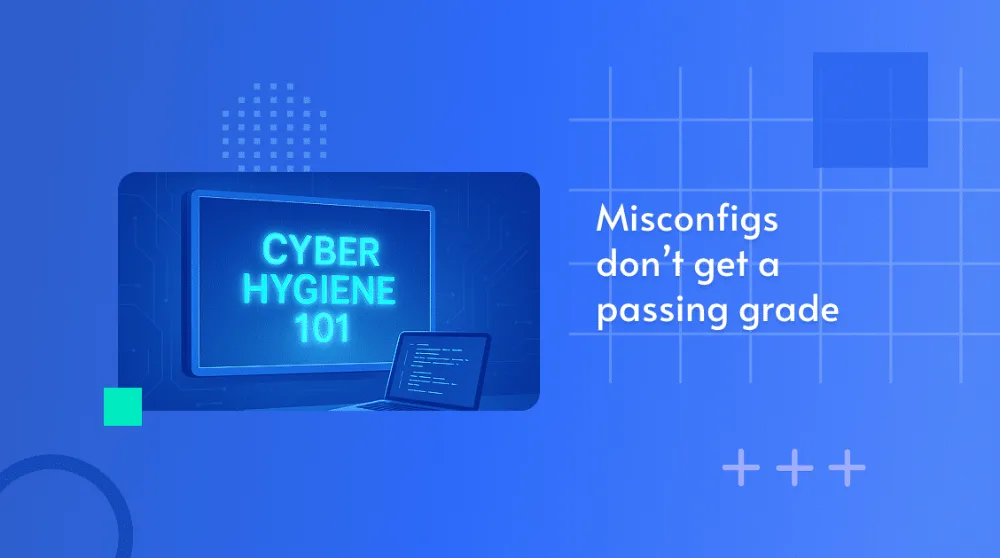
As backpacks get packed and classrooms fill up, it’s the perfect time for businesses to go back to school, too. Not for algebra—but for cybersecurity. While today’s digital threats are evolving fast, the most effective protection often lies in the basics: strong cyber hygiene, especially at the configuration level.
At Remedio, we believe that security misconfigurations aren’t just technical oversights, they’re the cracks hackers exploit. That’s why this back-to-school season, we’re spotlighting the foundational practices that protect organizations from the inside out.
Why "Basic" Cyber Hygiene Still Isn’t Basic Enough
Despite all the investment in security tools and detection systems, configuration errors remain a leading cause of breaches. Why? Because security teams are often reactive, not proactive and misconfigurations tend to fly under the radar until it’s too late.
Commonly neglected aspects of cyber hygiene include:
- Unused Admin Accounts lingering in Active Directory
- Default Passwords still active on internal services
- Disabled SMB Signing leaving doors wide open
- No visibility into configuration drift over time
- Lack of enforcement of baseline security policies
The Remedio Way: Bridging Awareness and Action
At Remedio, we tackle this challenge head-on by empowering IT teams with configuration visibility, risk prioritization, and automatic remediation that respects operational safety. We bring your security posture back into alignment, without breaking business continuity.
Cybersecurity doesn’t always require chasing the latest headline. Sometimes, it’s about doing the simple things right, consistently. As students gear up for a new year of learning, it’s time for businesses to hit the books, too. And Remedio’s here to make sure you pass with flying colors.
If you're interested in a more thorough evaluation of your cyber smarts, we're happy to offer you a FREE configuration risk assessment.
FAQ
Why are misconfigurations considered one of the leading causes of cyber incidents?
Unlike software vulnerabilities, misconfigurations are often introduced through everyday operational changes such as policy exceptions, temporary fixes, or inconsistent deployments. They create predictable weaknesses that attackers actively search for, making them one of the most common entry points for ransomware, credential theft, and lateral movement.
What's the difference between cyber hygiene and vulnerability management?
Vulnerability management focuses on identifying and remediating software flaws such as CVEs. Cyber hygiene is broader, encompassing secure configurations, identity controls, security policies, patching, configuration drift, and continuous maintenance of a secure operating state. Strong cyber hygiene reduces exposure even when no new vulnerabilities exist.
How can organizations maintain cyber hygiene as their environments constantly change?
Modern environments are in a constant state of change as users install software, administrators modify policies, devices join and leave the network, and applications evolve. Maintaining cyber hygiene requires continuous visibility into these changes, automated validation against approved baselines, and rapid remediation whenever systems drift from secure configurations.
Why is continuous configuration monitoring better than periodic security audits?
Periodic audits provide only a snapshot of security posture at a single point in time. Continuous monitoring identifies configuration changes as they occur, allowing security teams to detect drift quickly, reduce exposure windows, and ensure systems remain compliant between formal audits.
Can organizations automate cyber hygiene without increasing operational risk?
Yes, provided automation is designed with safety in mind. Effective remediation platforms validate proposed changes, understand system dependencies, support staged deployment, and provide rollback capabilities if unexpected issues occur. This enables organizations to improve security while minimizing the risk of business disruption.
How do configuration baselines help with regulatory compliance?
Configuration baselines establish a consistent security standard across devices and systems. They simplify compliance with frameworks such as CIS Benchmarks, NIST Cybersecurity Framework, PCI DSS, HIPAA, and ISO 27001 by making it easier to demonstrate that security controls are consistently enforced and maintained.
Which cybersecurity frameworks emphasize configuration management?
Configuration management is a foundational practice across nearly every major security framework, including the CIS Critical Security Controls, NIST Cybersecurity Framework, NIST SP 800-53, ISO 27001, PCI DSS, and Microsoft's Security Baselines. Each recognizes secure configurations as an essential control for reducing enterprise risk.
How do security teams measure the effectiveness of a cyber hygiene program?
Rather than focusing solely on the number of vulnerabilities detected, mature organizations measure metrics such as baseline compliance, configuration drift rates, mean time to remediate exposures, percentage of systems meeting security standards, recurring misconfigurations, and overall reduction in attack surface. These metrics provide a clearer view of whether cyber hygiene efforts are improving the organization's security posture.
About Author