
Gartner’s How to Achieve the Minimum Viable AI Governance


Unified Active Directory & GPO Security Validation
Enforce Secure Group Policy Across Active Directory – Without Gaps, Conflicts, or Drift
GPO security is more than creating Group Policy Objects. Enterprise environments constantly change, creating policy conflicts, configuration drift, inconsistent enforcement, and security gaps.
Remedio continuously validates, enforces, and restores secure Group Policy settings across Active Directory so intended policies remain effective over time.
Defining a Policy Is One Thing. Operationalizing It Is Another.
Even well-defined GPOs fail when enforcement is inconsistent across Active Directory and adjacent control systems.
Policy conflicts across GPO
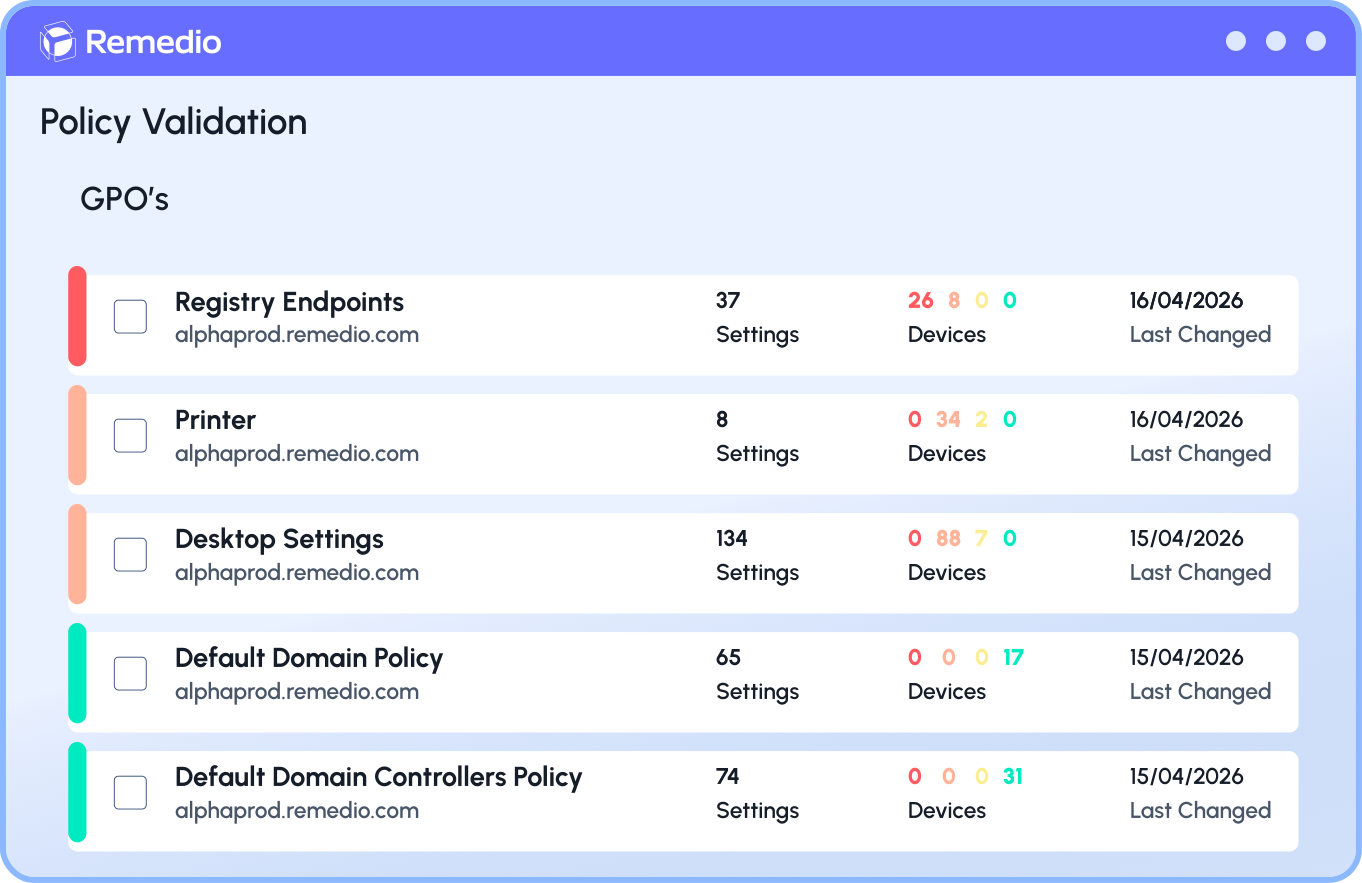
Remedio acts as an autonomous enforcement layer across Active Directory and beyond, validating every GPO against actual device states.
Continuous Group Policy Enforcement and Validation
Go from set & trust to vet & adjust, automatically.
- Validate and enforce Group Policy Objects across all endpoints and domains
- Detect orphaned, conflicting, or ineffective policies
- Ensure policies match real system states – not just AD definitions
Maintain A Single, Consistent Control Layer
Validate your configuration security regime – ensuring it works not just in theory, but in practice.

Baseline Standardization
- Validate that GPO, Intune, and AD policies are actually enforced on every device
- Automatically correct drift and misconfigurations
- Maintain consistent posture across all devices

Vulnerability & Patch Alignment
- Ensure GPO configs aren’t undermined by unpatched systems
- Align patching with policy intent and Active Directory standards
- Remediate configuration gaps and vulnerabilities together

Compliance Enforcement
- Map GPO settings to CIS, NIST, and internal policies
- Continuously validate and enforce compliance
- Automatically remediate non-compliant configurations

Application Control
- Detect unauthorized tools, scripts, and executables
- Remove unverified dev environment plugins and extensions
- Restrict over-privileged applications and automation

AI Governance and Remediation
- Discover unmanaged AI tools, agents, MCPs, and copilots
- Enforce hardened AI configurations and permission controls
- Automatically remediate AI exposure and policy drift
Built for Real-World Active Directory Environments
Remedio is designed for the complexity of modern AD ecosystems:
- Multiple domains and hybrid environments
- Coexistence of GPO, MDM, and local enforcement
- Legacy systems alongside modern endpoints
- Rapidly evolving AI and developer tooling
Safe, Controlled Enforcement
GPO changes can break systems – which is why they’re often avoided.
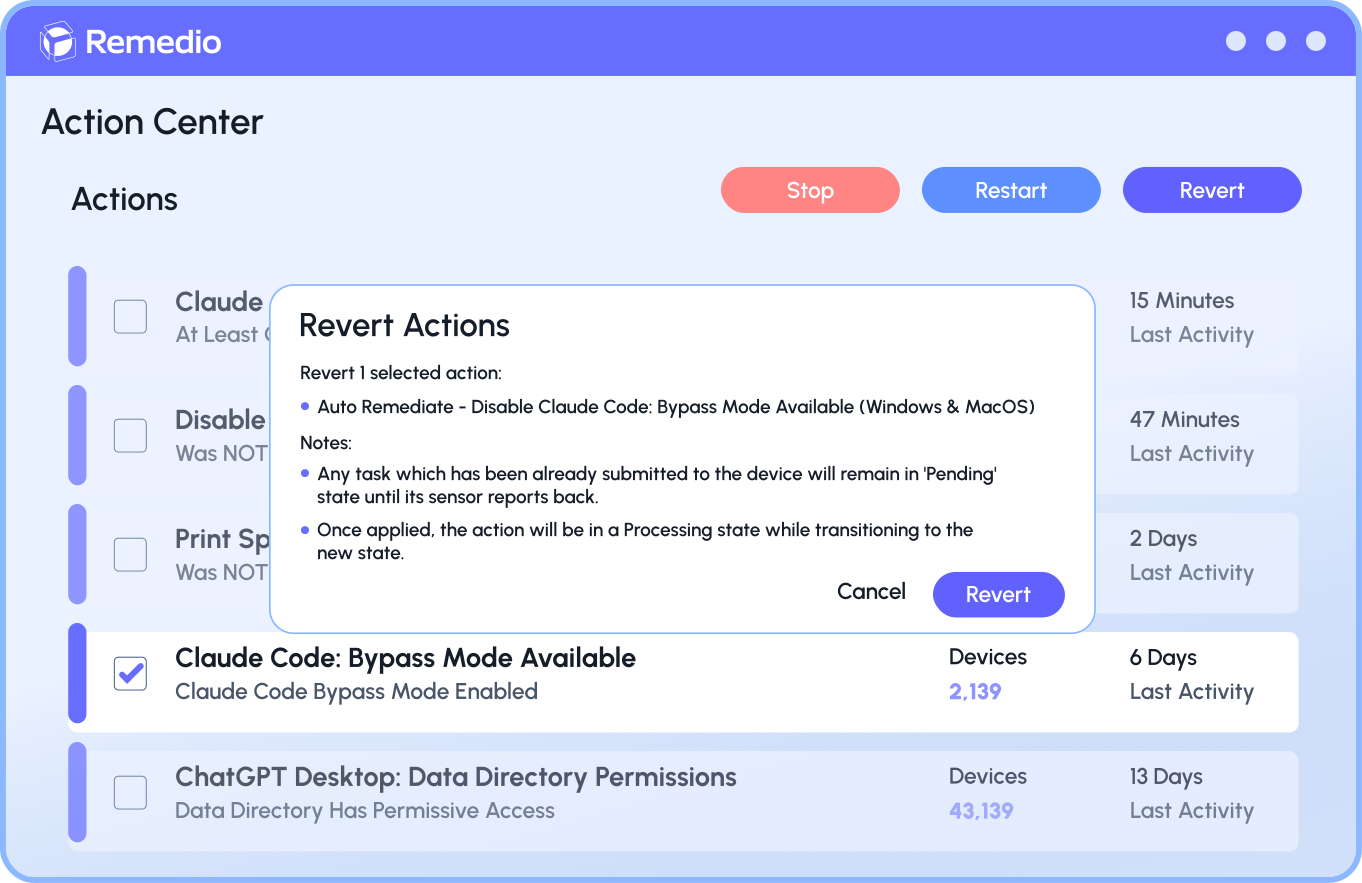
Remedio enables safe enforcement at scale.
- Policy-driven, pre-validated changes
- Dependency-aware execution
- Zero-disruption rollback
Rapid
Standardization of policy enforcement
Immediate
Reduction of policy drift
Continuous
Oversight and enforcement
Testimonials


Remedio gives us the ability to fix problems in our environments without impacting our operations; it’s a real game-changer.


Remedio has helped me deploy a Technical Security Baseline to all my endpoint devices globally.


Remedio gives our team incredibly detailed visibility into our global computing environment.


Remedio helps me close security gaps – including those I didn’t know I had.
Common Questions About GPO Security & Active Directory Group Policy Enforcement
What is GPO security?
GPO security is the practice of securing, validating, and continuously enforcing Microsoft Group Policy Objects (GPOs) across Active Directory. Effective GPO security helps prevent configuration drift, conflicting policies, unauthorized changes, and inconsistent enforcement that can weaken endpoint security. Rather than simply creating policies, organizations need to continuously verify that intended settings remain correctly applied across every managed device.
Why is GPO security important?
Group Policies often change as devices are added, users move between organizational units, software is deployed, or administrators modify settings. Over time, these changes can introduce policy conflicts, failed deployments, and security gaps. Continuous GPO security helps ensure security controls remain effective, reducing operational risk and supporting compliance initiatives.
What are the most common GPO security challenges?
Large Active Directory environments frequently encounter configuration drift, conflicting Group Policy inheritance, unauthorized policy modifications, hybrid management inconsistencies between Group Policy and Microsoft Intune, legacy policies that are never retired, and security settings that silently fail to apply. These issues reduce the effectiveness of Group Policy and increase enterprise risk.
Can GPO security be automated?
Yes. Modern GPO security platforms continuously validate Group Policy Objects, detect conflicts and configuration drift, and automatically enforce approved settings. This reduces manual administration while helping organizations maintain consistent security configurations across Active Directory environments.
How can organizations detect GPO drift?
GPO drift occurs when the actual configuration of a device no longer matches the intended Group Policy configuration. Continuous validation compares the desired policy state against real endpoint configurations, allowing security teams to identify drift, prioritize issues, and restore compliant settings before they become exploitable.
How does GPO security improve compliance?
Many security frameworks, including CIS Benchmarks, NIST, and ISO 27001, rely on consistent configuration management. Continuous GPO security helps organizations demonstrate that required security policies remain enforced over time, simplifying audit preparation and reducing compliance gaps.
Why does GPO enforcement fail in complex environments?
GPO (Group Policy Object) enforcement can fail in complex environments for several reasons, including:
- Broken logic or inconsistencies within GPOs
- Conflicts between GPO, MDM, and local configurations
- Ineffective scripting
- Unaccounted for nuance in operating systems
- Shadow IT, unmanaged local GPOs, or orphaned GPO instances
- Drift as a result of user change or updates
Remedio validates and enforces policies continuously, ensuring they are applied as intended.
How does Remedio improve Active Directory management and hardening?
Remedio improves Active Directory (AD) management and hardening in several ways:
- Automated remediation: Remedio detects and fixes misconfigurations across endpoints and servers, including Active Directory, with built-in rollback if needed.
- Policy validation: Remedio checks that all group policies are accurately and consistently applied, and benchmarks configurations against industry standards like CIS and NIST.
- GPO optimization: Remedio flags issues such as duplicated or conflicting GPO settings, unlinked GPOs, and multiple loopbacks to ensure organizational consistency.
- AD account management: Remedio helps clean up obsolete or unused accounts, reducing potential security risks.
- Continuous monitoring and best practice enforcement: The platform continuously inspects AD, GPOs, and devices to flag risks, enforce best practices, and maintain compliance.
- Device hardening recommendations: Remedio provides actionable tips for further strengthening endpoint and server configurations.
Overall, Remedio streamlines AD management by automating security best practices, reducing risk, and ensuring configuration consistency across the environment.
Can Remedio work alongside tools like Intune or JAMF?
Yes. Remedio acts as an enforcement layer across GPO, MDM, and local configurations, resolving conflicts, aligning policies, and ensuring consistent control across all enforcement mechanisms.
For Intune specifically, Remedio offers validation of Intune configurations and ensures they are set to best practices, helping you monitor and harden devices even in mixed or hybrid management scenarios.