
Gartner’s How to Achieve the Minimum Viable AI Governance


Financial Services Cybersecurity
Improve Security and Resilience Without Compromising Continuity
Financial institutions operate under constant pressure to strengthen security controls and maintain uninterrupted operations. In practice, those goals often conflict.
Remedio removes the tradeoff.


Reduce Exposure Without Impacting Stability
Built for Environments Where Change Is Risky
Financial infrastructure is not designed for rapid change. Hardening efforts are complicated by:
- Legacy and backward compatibility requirements
- Deep system dependencies across applications and vendors
- Strict change control and audit needs
- Hybrid environments spanning old and new systems
Remedio delivers safe, proactive, and low-touch posture management within these constraints.
Breach or Breakage, It's All Disruptive
Security and Operations Don’t Need to Be At Odds
In financial environments, the biggest risk isn’t lack of awareness, it’s fear of making changes.
Remedio continuously monitors your devices and systems, detecting and correcting unpatched vulnerabilities, misapplied policies, and insecure configurations without jeopardizing existing operability.
Users enjoy push-button, production-safe hardening in full view of downstream dependencies and with built-in rollback as a failsafe.
Securing Financial Services From the Bottom Up
Maintaining valuable customer data, complex legacy infrastructure, and stringent regulatory requirements, financial organizations remain among the most targeted industries.
Remedio helps banks, credit unions, lenders, insurers, and other financial institutions continuously reduce cyber risk without disrupting business operations.


A New Standard Unlocked
For financial service organizations, quality cybersecurity is more than a best practice, it’s a regulatory requirement.
In contrast to point-in-time audits, Remedio makes it possible to ensure compliance at all times – whether for NIST, PCI, SOX, DORA or whatever else.
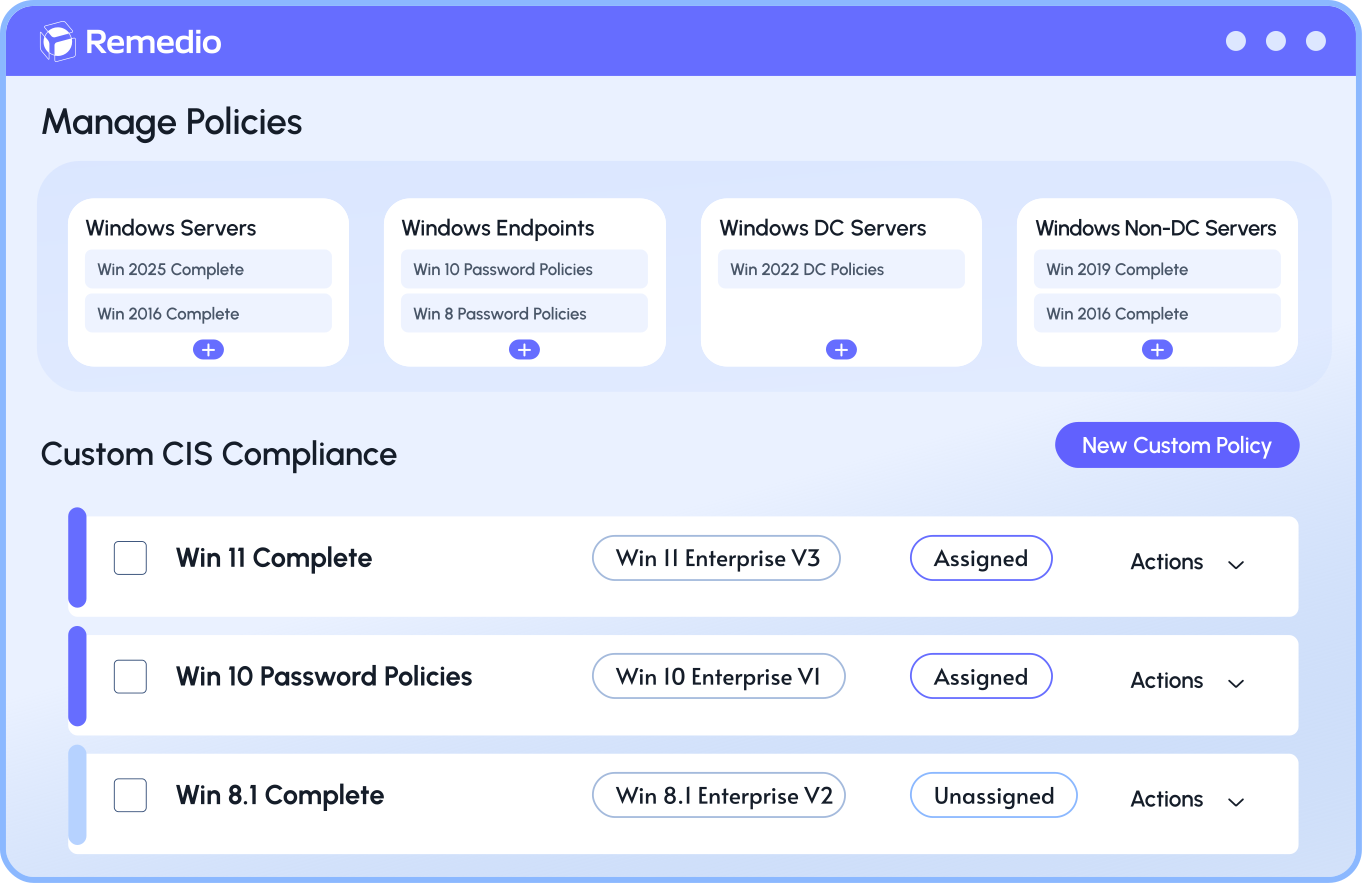
Device Hygiene: In View and Enforced
Financial services operate under constant pressure to maintain constant audit readiness and zero downtime.
Remedio puts them in position to meet and beat those requirements without hassle or headache.
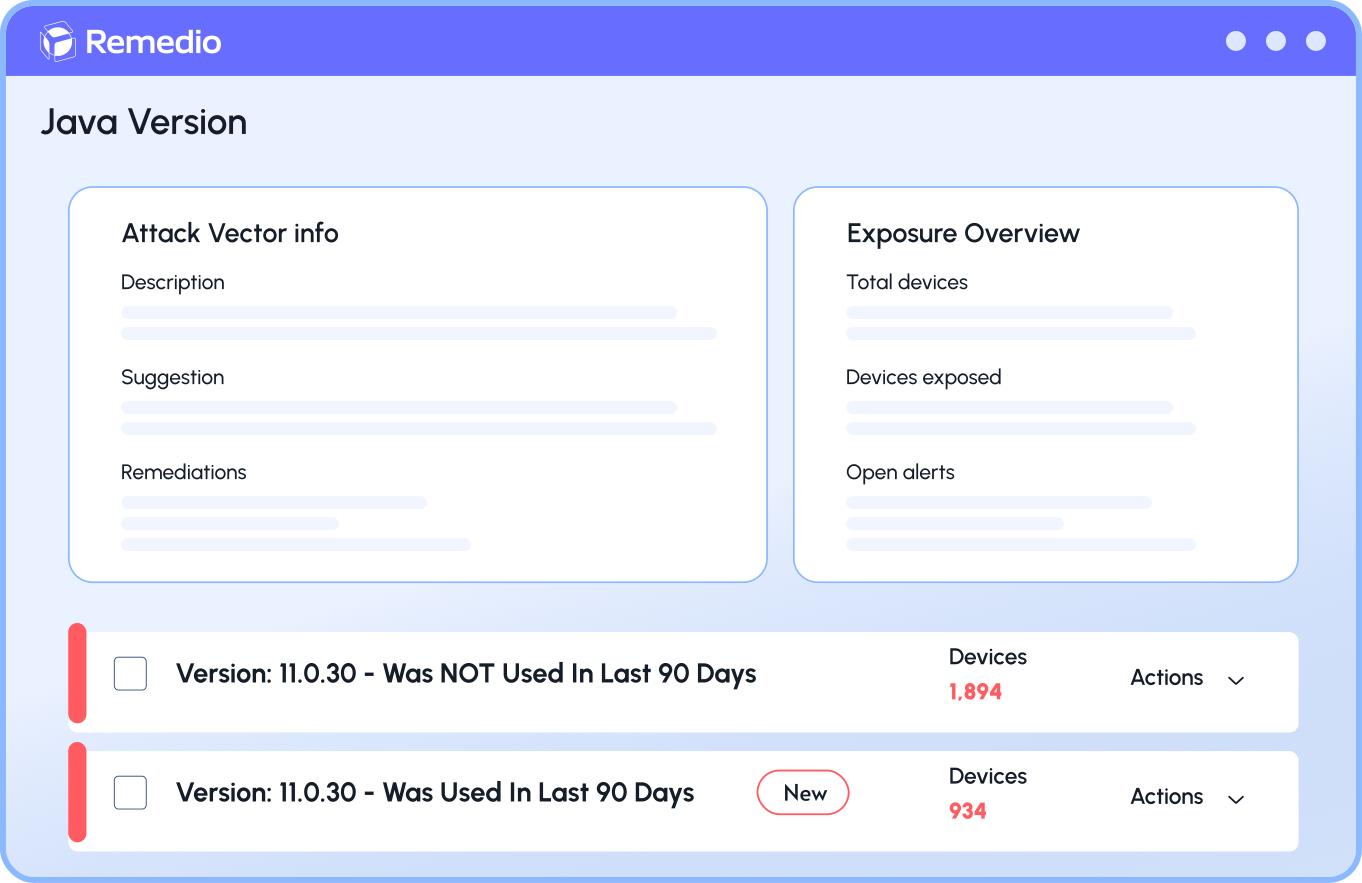
Always-on
Compliance and audit enablement
Full control
Over applications and AI usage
Measurable
Demonstrable risk reduction.
Case Study
Large Credit Union Transforms SecOps with Remedio

The Credit Union was looking to harden their security, streamline framework adoption, and support rapid response capabilities.
In Remedio they found a partner to help them automate processes and eliminate threats without risk to the business.
- 10K devices secured
- 16 weeks saved
- 0 disruption
What Security Leaders Say


Remedio gives us the ability to fix problems in our environments without impacting our operations; it’s a real game-changer.


Remedio has helped me deploy a Technical Security Baseline to all my endpoint devices globally.


Remedio gives our team incredibly detailed visibility into our global computing environment.


Remedio helps me close security gaps – including those I didn’t know I had.
Frequently Asked Financial Services Cybersecurity Questions
What are the biggest financial services cybersecurity challenges?
Financial institutions must defend against increasingly sophisticated threats while maintaining uninterrupted operations. Legacy infrastructure, complex application dependencies, strict change management processes, and evolving regulatory requirements make even routine security improvements difficult. As environments continually change through updates, new applications, cloud adoption, and user activity, configuration drift can quietly introduce new exposures. Effective financial services cybersecurity requires reducing risk without disrupting the systems that customers and employees rely on every day.
Why does financial services cybersecurity require continuous validation?
Cybersecurity is not a one-time project. Security controls, configurations, software versions, and access privileges constantly change as financial environments evolve. Point-in-time assessments can quickly become outdated, leaving gaps between audits. Continuous validation enables financial institutions to detect configuration drift, enforce security baselines, maintain regulatory compliance, and safely remediate emerging exposures before they can be exploited, helping maintain both operational resilience and a stronger security posture.
How can financial institutions improve cybersecurity without disrupting operations?
Reducing cyber risk should not come at the expense of business continuity. The most effective approach combines continuous visibility with production-safe remediation that validates changes before deployment, accounts for system dependencies, and provides rollback if needed. This allows financial institutions to strengthen security while minimizing operational risk and unplanned downtime.
How can financial institutions automate cybersecurity compliance?
Automation helps financial organizations continuously validate security controls against internal policies and regulatory frameworks instead of relying on periodic audits. By identifying configuration drift, enforcing approved baselines, and maintaining up-to-date evidence, automated compliance reduces manual effort while improving audit readiness and overall security posture.
What cybersecurity frameworks apply to financial services organizations?
The specific frameworks vary by organization and geography, but many financial institutions align with standards and regulations such as NIST Cybersecurity Framework, PCI DSS, DORA, SOX, ISO 27001, GLBA, and FFIEC guidance. Continuously validating security configurations against these requirements helps reduce compliance gaps as environments evolve.
What is configuration drift, and why does it matter in financial services?
Configuration drift occurs when devices, applications, or security controls gradually deviate from approved configurations because of updates, manual changes, software installations, or policy modifications. In financial environments, even small deviations can create exploitable attack paths or compliance violations. Detecting and correcting drift continuously helps maintain a consistent, secure operating environment.
Can Remedio help secure banks, credit unions, insurers, and other financial institutions?
Yes. Remedio is designed for complex, highly regulated environments where security improvements must not interfere with business operations. The platform continuously identifies configuration weaknesses, prioritizes risk, automates safe remediation, and helps organizations maintain compliance while reducing operational overhead across banking, lending, insurance, and other financial services environments.
Can Remedio help enforce security in high-speed trading and latency-sensitive environments?
Yes. In high-speed trading environments, even small disruptions can have major impact.
Remedio analyzes system dependencies so you know exactly which changes can be made safely and which carry a risk of operational impact – a must when seconds matter.
Remedio enables safe, non-disruptive enforcement with instant rollback capabilities, ensuring security improvements don’t slow down operations.
The sensor is a lightweight (less than 5MB) task scheduler that has no impact on device performance.
How does Remedio work within strict change management processes?
Financial institutions operate under tightly controlled change management frameworks. Remedio aligns with these processes by enabling pre-validated, policy-driven changes that can be executed safely within approved windows, reducing risk while maintaining compliance.
Every policy change and remediation action is fully auditable, instantly reversible, and can be safely applied or rolled back with a click. The platform features “Auto-Reapply,” which keeps your policies continually enforced across system updates, user changes, device additions, and group edits .
Remedio can also integrate with popular change management platforms like ServiceNow, ensuring that all remediations are properly documented and coordinated in your workflow.
You get centralized control, audit-ready visibility, and autonomous remediation recommendations aligned with your organization’s goals – all while maintaining a strong safety net so no change disrupts operations .
How does Remedio support multiple compliance frameworks simultaneously?
Remedio maps and enforces controls across frameworks such as PCI, SOX, DORA, and SOC 2 simultaneously.
Remedio even supports custom compliance by allowing organizations to define and enforce their own tailored policies and controls, picking and choosing specific controls from frameworks like NIST and CIS.
With the Remedio Assure, you can map, assess, and remediate compliance based on your specific requirements while maintaining full auditability and rapid visibility across all devices.
The platform visually shows you exactly where you’re compliant and where you’re not, and allows you to bring devices up to standard with just a couple of clicks.