Gartner’s How to Achieve the Minimum Viable AI Governance


Healthcare Cybersecurity
Harden HIT Environments Without Disrupting Patient Care
Enforcing security in clinical networks is uniquely difficult. Operators face legacy burdens, heavy regulations, patch-resistant devices, and 24/7 uptime requirements. The stakes couldn’t be any higher.
Remedio ensures things run smoothly and securely.


Built for Non-Stop Operations
Where Risk Management Meets Operational Excellence
Remedio removes the friction between IT Operations and Security purviews delivering safe, proactive, and low-disruption posture management.
- Automate enforcement
- Reduce manual workloads
- Maintain system availability & strengthen resilience
- Systematically shrink risk across the environment
Turn security from an impediment to operational efficiency to a driver of it.
Security that Doesn't Compromise
A New Standard for Healthcare Security
In healthcare, the problem isn’t lack of awareness – it’s the fear of disrupting care in a complexly interdependent ecosystem…
Sensitive imaging systems & medical devices…
Remedio has you covered, continuously detecting and correcting misconfigurations, vulnerabilities, and policy gaps without compromising operations.
Closing the Hidden Security Gap In Healthcare IT
Systematically remove and prevent risk before it takes root – eliminating errors, automating processes, and ensuring strong device hygiene.


Secure and Safe Device Posture
Healthcare cybersecurity isn’t just about protection – it’s about ensuring care delivery is never compromised.
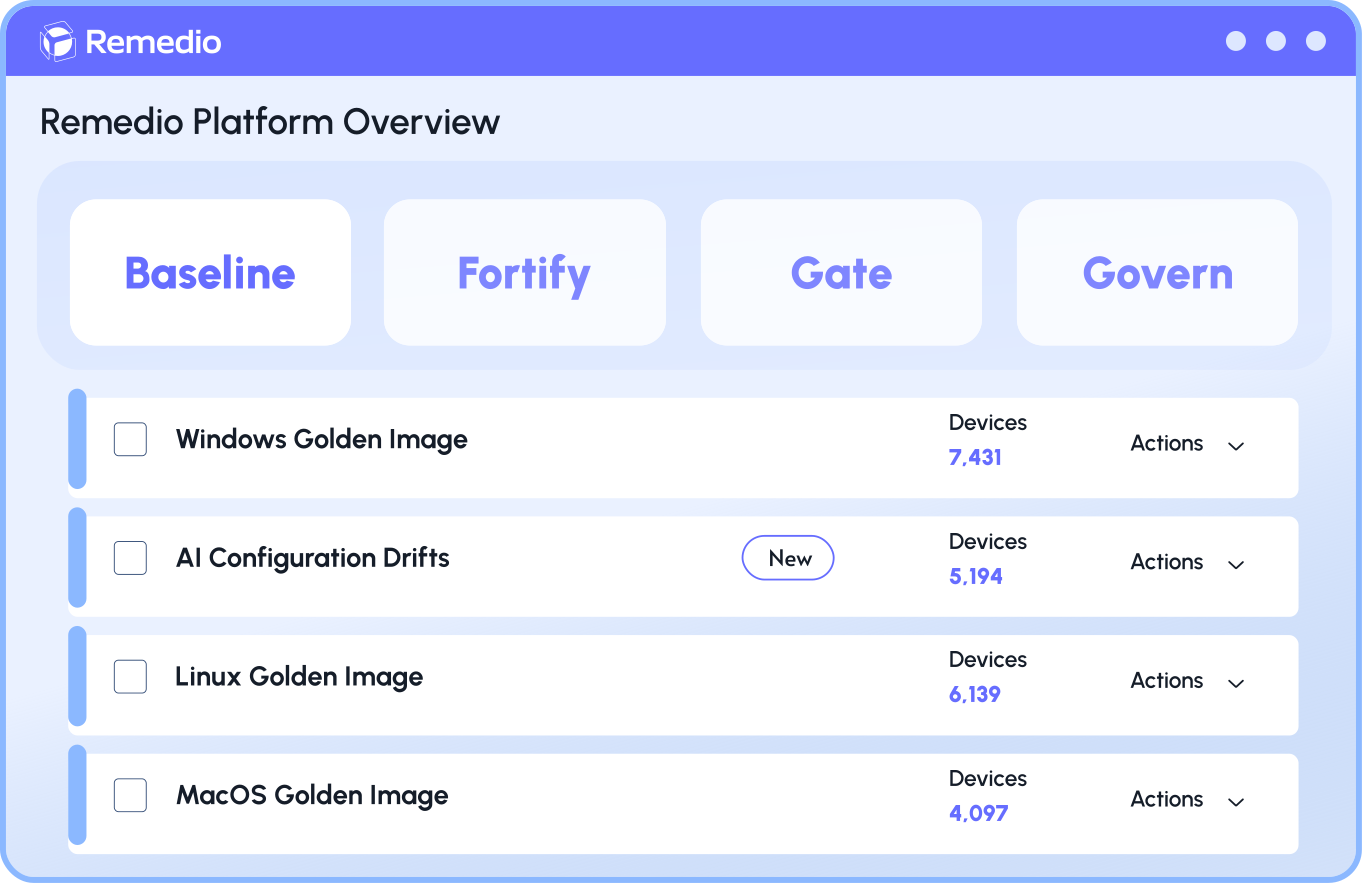
Remedio enables continuous enforcement across systems, maintaining both security posture and operational integrity at all times.
Always-On. Care-Safe. Measurable.
Protect against disruption to clinical workflows. Achieve:
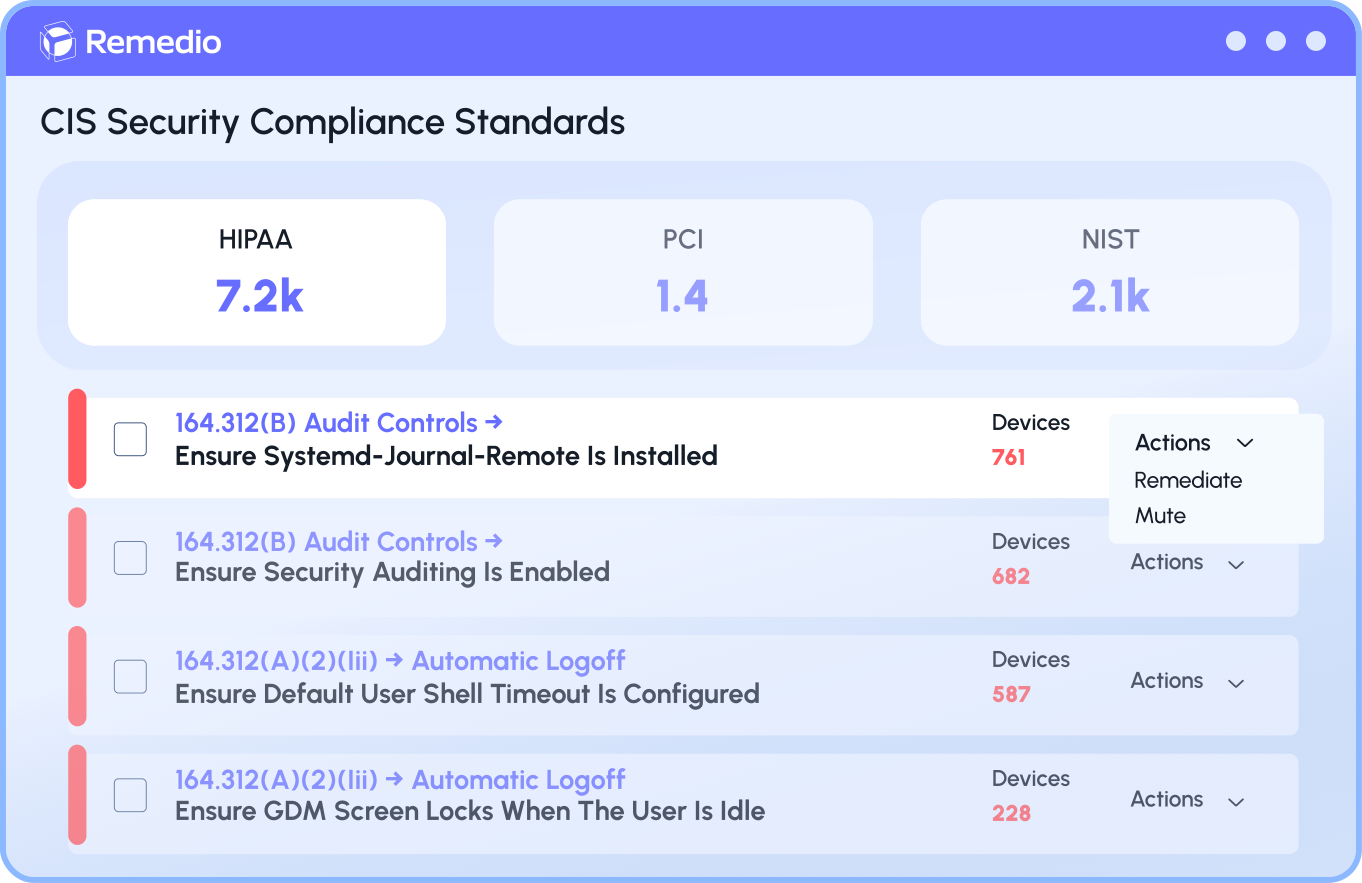
- Continuous HIPAA compliance
- Full control, no operational disruption
- Measurable reduction in risk across clinical environments
Case Study
Mid Cheshire Hospitals Streamline Compliance, Boost Security

With stretched IT resources and increasing compliance burdens, Mid Cheshire needed to tighten oversight and improve efficiencies.
In Remedio they found an easy-to-use, quick-to-work solution ideally suited to a complex and fast-evolving threat landscape.
- 3 facilities overseen
- 10K+ devices secured
- 2 audits streamlined
What Security Leaders Say


Remedio gives us the ability to fix problems in our environments without impacting our operations; it’s a real game-changer.


Remedio has helped me deploy a Technical Security Baseline to all my endpoint devices globally.


Remedio gives our team incredibly detailed visibility into our global computing environment.


Remedio helps me close security gaps – including those I didn’t know I had.
Common Healthcare Cybersecurity Questions
What is healthcare cybersecurity?
Healthcare cybersecurity is the practice of protecting hospitals, health systems, clinics, medical devices, clinical applications, and healthcare IT infrastructure from cyber threats that could disrupt patient care or expose sensitive health information. Unlike many industries, healthcare organizations must balance strong security with continuous clinical availability, regulatory compliance, and the operational demands of delivering care around the clock. Effective healthcare cybersecurity requires continuously identifying and correcting security gaps before they can affect operations, patient safety, or compliance.
What are the biggest healthcare cybersecurity challenges today?
Healthcare organizations face a unique combination of cybersecurity challenges, including legacy operating systems, unpatchable medical devices, complex clinical workflows, third-party applications, ransomware, configuration drift, and increasingly connected environments. Security teams must reduce cyber risk without interrupting patient care, taking devices offline, or creating additional operational burden. As healthcare environments continue to grow more interconnected, continuously validating and safely remediating security weaknesses has become just as important as detecting threats.
Why is healthcare a top target for cyberattacks?
Healthcare organizations manage highly sensitive patient data while operating thousands of interconnected devices, clinical applications, and critical systems that must remain available around the clock. Many environments also include legacy technology and specialized medical devices that cannot always be patched or replaced quickly. This combination of valuable data, operational complexity, and limited maintenance windows makes healthcare an attractive target for ransomware, credential theft, and attacks that exploit security misconfigurations.
What makes medical device security difficult?
Many medical devices are designed to prioritize safety, reliability, and long service lifecycles over rapid software updates. As a result, healthcare organizations often rely on devices that cannot be patched frequently, support modern security controls, or tolerate configuration changes without careful validation. Effective medical device security focuses on continuously reducing exposure through secure configurations, policy enforcement, and risk remediation while preserving clinical functionality and patient care.
Can Remedio mitigate exposure from secure medical devices that cannot be patched or substantially modified?
Many healthcare devices, such as imaging systems, cannot be easily updated. Remedio reduces risk by enforcing surrounding configurations, controlling access, and mitigating exposure without requiring direct changes to the device itself.
By leveraging tools like Remedio, you can proactively manage configurations, continuously monitor devices for risk, and remediate exposure in ways that maintain both security and clinical functionality .
How does healthcare cybersecurity differ from enterprise cybersecurity?
Most enterprise security programs can tolerate planned maintenance windows or temporary operational disruption. Healthcare cannot. Every security decision must account for patient safety, clinical workflows, medical device availability, and regulatory obligations alongside cyber risk. Healthcare cybersecurity therefore emphasizes continuous risk reduction, safe remediation, and operational resilience, allowing organizations to strengthen security without disrupting clinicians or delaying care.
How does HIPAA influence cybersecurity?
While HIPAA does not prescribe specific technologies, it requires healthcare organizations to implement administrative, physical, and technical safeguards that protect the confidentiality, integrity, and availability of electronic protected health information (ePHI). Maintaining HIPAA compliance requires organizations to continuously monitor security controls, identify configuration drift, remediate policy violations, and demonstrate that security safeguards remain effective as clinical environments evolve.
How does Remedio support HIPAA compliance at the device level?
Remedio continuously enforces HIPAA-aligned configurations across endpoints, automatically correcting non-compliant settings and maintaining audit-ready posture across distributed clinical environments.
Through continuous monitoring, policy enforcement, and push-button remediation, organizations can maintain consistent, secure configuration baselines and deliver continuous compliance across all endpoints.
How does Remedio avoid disrupting clinical workflows?
Remedio maps operational dependencies to ensure that security changes never conflict with business or clinical needs, and offers push-button remediation as well as instant rollback functionality in case adjustments are needed.
This approach streamlines workflows, eliminates human error, and enables fixes to be made without impacting clinical operations. Continuous monitoring and automation ensure that compliance and security are maintained without unplanned disruptions.
What types of healthcare organizations does Remedio protect?
Remedio helps hospitals, integrated health systems, ambulatory care providers, dental service organizations (DSOs), specialty clinics, and other healthcare organizations continuously reduce cyber risk without disrupting patient care. The platform secures clinical workstations, servers, medical devices, and supporting infrastructure by identifying and safely remediating misconfigurations, enforcing security baselines, maintaining HIPAA-aligned controls, and reducing configuration drift across distributed healthcare environments.