Gartner’s How to Achieve the Minimum Viable AI Governance


Webinar
Healthcare Security Automation for Modern Clinical Environments
Healthcare organizations today face relentless cyber threats and strict regulatory demands. Reactive security models just can’t keep up.
To protect patients and ensure compliance, healthcare providers need automation and proactive posture management.
Better Security & Compliance, Less Effort
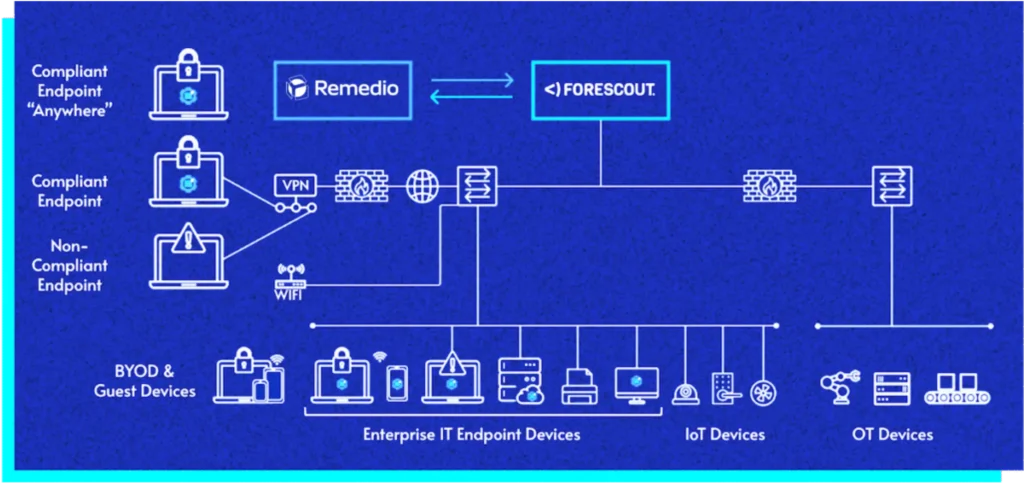
Learn how Remedio and Forescout combine real-time asset intelligence with automated security remediation to continuously reduce exposure without disrupting patient care.
Brought to you by:


Powering Bullet-Proof Security with Automation and Innovation
Watch the session to learn:
- How Forescout and Remedio combine discovery with automated remediation
- How to continuously identify and correct dangerous security misconfigurations
- Strategies for securing unmanaged and clinical devices
- Reducing audit effort through continuous compliance validation
- Practical healthcare deployment examples and lessons learned
Speakers:

Todd Bertchume
Technical Marketing Engineer | Forescout

Mor Bikovsky
VP Strategy & Cust. Success | Remedio
Why Healthcare Security Automation Matters
Healthcare environments change constantly.
Devices move between networks, clinical systems evolve, temporary exceptions accumulate, and security configurations drift over time. Manual processes simply cannot keep pace.This 30-minute conversation looks at how combining continuous visibility with automated remediation allows healthcare organizations to reduce operational risk while improving compliance, minimizing disruption, and protecting patient care.
Key Topics Covered:
- Healthcare attack surface management
- Continuous configuration validation
- Medical device visibility
- Policy orchestration and auto-remediation
- HIPAA and NIST alignment
What is healthcare security automation?
Healthcare security automation uses technology to continuously identify, validate, and remediate security issues across healthcare environments. By reducing manual effort, organizations can improve security posture, maintain compliance, and protect patient care without slowing clinical operations.
Why is healthcare security automation becoming more important?
Healthcare organizations manage thousands of connected devices, clinical systems, and users across increasingly complex environments. Manual security processes cannot keep pace with constant configuration changes, emerging threats, and evolving compliance requirements, making automation essential for maintaining a resilient security posture.
How does healthcare security automation reduce cyber risk?
Automation continuously evaluates device configurations, security controls, and policy compliance to identify risks as they emerge. It can safely remediate approved issues, reduce configuration drift, and shorten the time between identifying a security gap and correcting it.
How do Forescout and Remedio work together?
Forescout provides continuous discovery and visibility across managed, unmanaged, and medical devices. Remedio complements that visibility by continuously assessing device configurations, identifying security gaps, and automating safe remediation. Together, they help healthcare organizations move from simply finding risk to continuously reducing it.
Can healthcare security automation support regulatory compliance?
Yes. Automation continuously validates device configurations against internal security policies and frameworks such as HIPAA and NIST. Rather than relying solely on periodic audits, healthcare organizations gain ongoing insight into their compliance posture and can address issues before they become audit findings.
Will automating security changes disrupt clinical operations?
Modern healthcare security automation platforms use policy-driven workflows, validation, staged deployment, and rollback capabilities to help ensure security improvements can be implemented safely while minimizing disruption to patient care and critical clinical systems.
Who should watch this webinar?
This webinar is designed for healthcare CISOs, IT and security leaders, infrastructure architects, biomedical engineering teams, compliance professionals, and anyone responsible for securing healthcare environments while maintaining operational continuity.