Gartner’s How to Achieve the Minimum Viable AI Governance


Blog
LockBit 2.0 Ransomware: Insights & Counter-Measures

Config hardening
Vulnerabilities

The cyber threat landscape has been significantly heightened by the emergence of LockBit 2.0, an advanced and pernicious form of ransomware.
LockBit 2.0, recognized as the leading global ransomware threat in 2022, has targeted a broad array of critical infrastructure sectors, including government, education, healthcare, and more, highlighting the need for effective cybersecurity measures.
This blog, informed by insights from CISA and recent reports, explores LockBit 2.0’s complexities and how Remedio’s innovative solutions provide robust defenses against this evolving cyber menace.
Here, we will focus on a really insightful report that was published by CISA. Delving into the latest LockBit2.0 incidents, the article offers valuable insights on:
🔍 Technical details
📊 Statistics
🛡️ Mitre Attack Techniques
Crucially, it emphasizes mitigation strategies!
The Emergence of LockBit 2.0
LockBit 2.0 represents an evolution in ransomware sophistication. Building upon the disruptive capabilities of its predecessor, it has been increasingly targeting a wide range of sectors globally.
LockBit 2.0, as a Ransomware-as-a-Service (RaaS), allows affiliates to launch attacks using enhanced tools and infrastructure, making its detection and mitigation more challenging.

Technical Intricacies of LockBit 2.0 Ransomware
The technical prowess of LockBit 2.0 lies in its ability to exploit misconfiguration vulnerabilities in commonly used applications and systems.
By abusing known CVEs like Apache Log4J and leveraging exploits in RDP, LockBit 2.0 gains unauthorized access and control over systems. This capability is further augmented by its use of sophisticated techniques for lateral movement, such as Cobalt Strike, and its ability to manipulate and clear Windows Event Log files to cover its tracks.
Staging a Proactive Defense Against LockBit 2.0 Ransomware
In response to the multifaceted nature of LockBit 2.0, Remedio has developed a comprehensive strategy as per the CISA report Remedio provides curation and mitigation mapped to the MITRE ATT&CK framework.
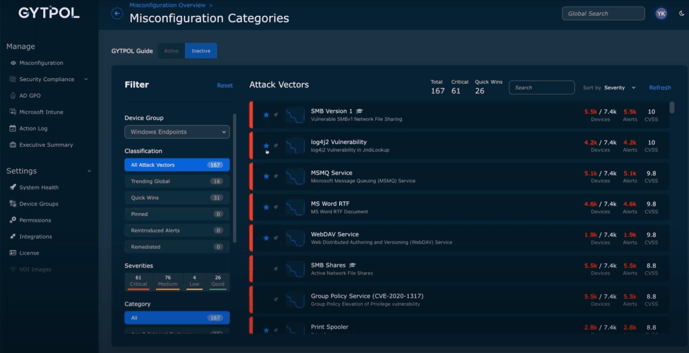
- Active Directory Protection: By continuously monitoring and rectifying device misconfigurations in the Active Directory, Remedio prevents one of LockBit 2.0’s primary attack vectors.
- Dynamic Threat Detection and Remediation: Remedio’s systems are designed to detect and remediate the exploitation of misconfiguration vulnerabilities and abuses of system features, a common tactic of LockBit 2.0.
- Advanced Alerting and Monitoring: Our solutions are equipped to identify and alert on suspicious activities that are indicative of LockBit 2.0 attacks, such as unusual changes in the Windows Event Log files.
- Stringent Access Controls and Policy Enforcement: Remedio enforces robust access control and auditing measures, significantly reducing the risk of unauthorized access and lateral movement within the network – a tactic frequently used by LockBit 2.0.
- Regular Compliance and Security Assessments: Keeping pace with evolving threats, Remedio ensures that organizations’ security measures align with the latest standards, providing an added layer of defense against sophisticated ransomware like LockBit 2.0.
A Cut Above
LockBit 2.0, with its enhanced capabilities, poses a serious threat to organizations worldwide. However, with Remedio’s comprehensive and proactive cybersecurity solutions, businesses can effectively shield themselves against this sophisticated ransomware.
By staying ahead in detection, remediation, and compliance, organizations can ensure their resilience against such advanced cyber threats.


FAQ
What is LockBit 2.0 ransomware?
LockBit 2.0 is a Ransomware-as-a-Service operation that enables affiliates to launch ransomware attacks using a shared malware platform and supporting infrastructure. It became one of the most active ransomware families by combining rapid encryption, data extortion, and attack techniques designed for enterprise environments.
How does LockBit 2.0 typically gain access to enterprise networks?
LockBit 2.0 commonly exploits exposed services, stolen credentials, known software vulnerabilities, and security misconfigurations. Once inside a network, attackers may use legitimate administrative tools and lateral movement techniques to expand access before deploying ransomware.
Why are security misconfigurations a significant ransomware risk?
Security misconfigurations can create unintended attack paths that allow threat actors to escalate privileges, move laterally, or weaken defensive controls. Even patched systems can remain exposed when unnecessary services, excessive permissions, weak authentication settings, or insecure policies remain in place.
Can preventing security misconfigurations reduce ransomware risk?
Yes. Continuously identifying and remediating configuration weaknesses reduces the number of viable attack paths available to ransomware operators. Hardening systems against established security baselines can limit opportunities for unauthorized access, privilege escalation, and lateral movement.
What role does the MITRE ATT&CK framework play in defending against LockBit 2.0?
The MITRE ATT&CK framework helps security teams map LockBit 2.0 behavior to known attacker tactics and techniques. This allows defenders to identify control gaps, prioritize mitigations, improve detection coverage, and validate whether existing safeguards address relevant attack paths.
Why is Active Directory a common target during ransomware attacks?
Active Directory controls authentication, permissions, and administrative access across many enterprise environments. Compromising it can allow attackers to escalate privileges, distribute malware, access additional systems, and gain broad control over the network.
How can organizations detect ransomware activity before encryption begins?
Organizations can look for suspicious privilege escalation, credential abuse, unauthorized configuration changes, unusual use of administrative tools, and unexpected lateral movement. Behavioral monitoring and continuous validation can provide opportunities to interrupt an attack before widespread encryption occurs.
Is patch management alone enough to stop ransomware such as LockBit 2.0?
No. Patch management addresses known software vulnerabilities, but ransomware campaigns also exploit insecure configurations, excessive privileges, exposed services, weak access controls, and operational gaps. Effective defense requires vulnerability management, configuration hardening, monitoring, and access control to work together.
About Author