Gartner’s How to Achieve the Minimum Viable AI Governance


Estate-Wide Manufacturing Security
Manufacturing Security Built for Modern IT, OT & AI Environments
Remedio provides continuous manufacturing security to support productivity and business continuity.


Built for IT/OT Manufacturing Environments
Modern Manufacturing Security for Any Infrastructure
Today’s environments mix legacy OT with modern IT across distributed sites and inconsistent configurations. Uptime demands limit updates, while AI adoption often lacks oversight. Controls exist – but aren’t consistently enforced.
Remedio changes that by turning controls into continuous, production-safe enforcement across IT, OT, and AI.
Built for IT/OT Manufacturing Environments
Eliminate Drift Across Every Domain & Site
Remedio unifies all control layers into a single enforcement engine that:
- Works across IT, OT, and IoT systems
- Supports legacy and modern infrastructure
- Designed for high-uptime, production-critical environments
- Adapts to plant-level variability and global operations
Unified Manufacturing Security Controls
We don’t just detect risk across your estate.
We eliminate it safely, continuously, and without disrupting production.


Built for Safe Enforcement
Manufacturing teams avoid remediation for one reason: fear of breaking production.
Remedio removes that barrier:
- Policy-driven, pre-validated changes
- Dependency-aware execution
- Zero-disruption remediation
- Instant rollback for every action
Centralized Inter-Operable Oversight
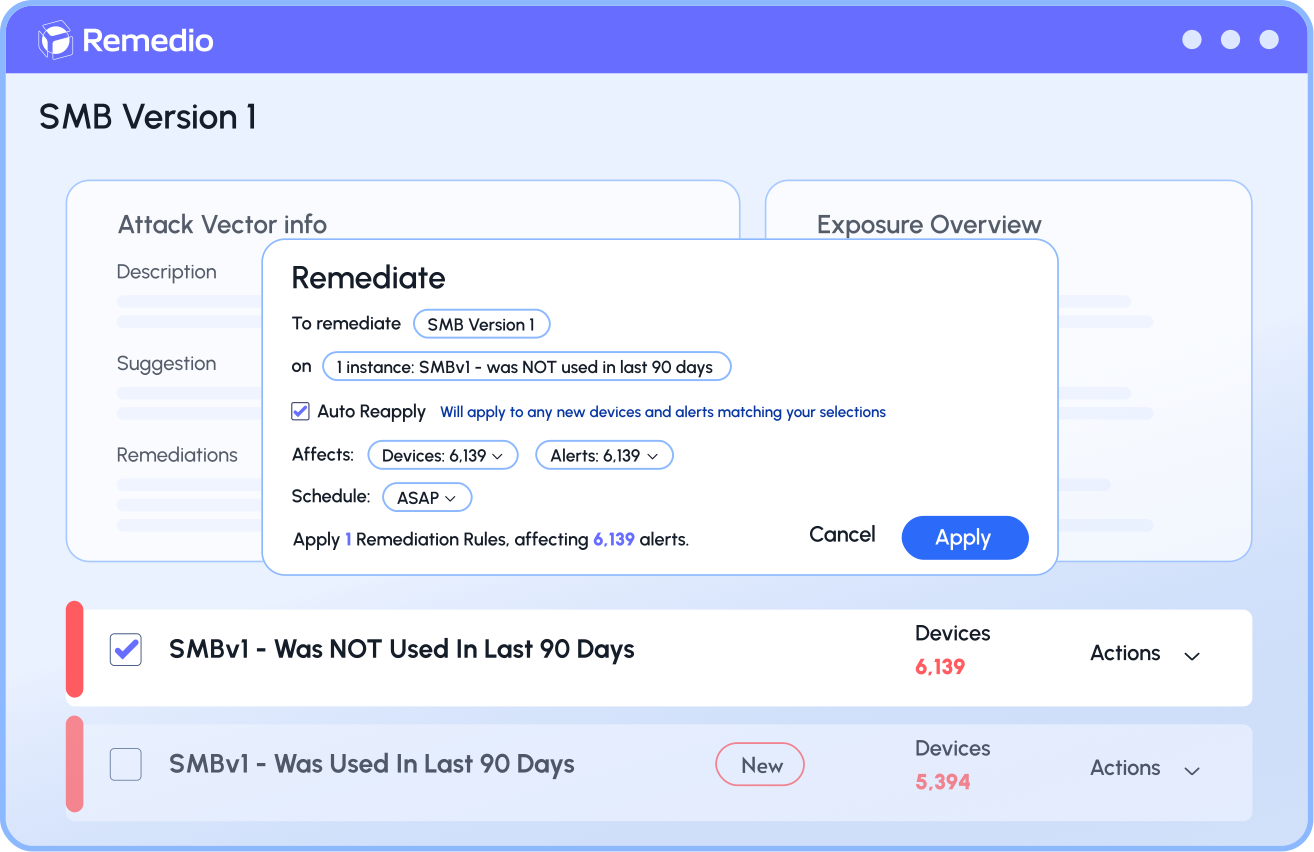
Regardless of device type, vendor ecosystem, or infrastructure category, Remedio integrates with your existing security stack (Forescout, Claroty, Armis, Falcon, etc.) to de-silo oversight and deliver granular control across hardening, patching, and compliance efforts.
Total
Control of internal controls and tooling
Zero
Drift or disruption across plants and systems
Continuous
Compliance & vulnerability management at scale
Case Study
Carlsberg Automates Processes, Hardens Security

The beloved Food & Bev brand sought out tech to help level-up their posture management, incident response, endpoint protection, and vulnerability management.
They needed a solution capable of effectuating change without negatively impacting daily operations or the production processes.
They found Remedio.
Testimonials


Remedio gives us the ability to fix problems in our environments without impacting our operations; it’s a real game-changer.


Remedio has helped me deploy a Technical Security Baseline to all my endpoint devices globally.


Remedio gives our team incredibly detailed visibility into our global computing environment.


Remedio helps me close security gaps – including those I didn’t know I had.
Common Manufacturing Security Questions
What is manufacturing security?
Manufacturing security is the practice of protecting the systems that keep production running, including IT infrastructure, operational technology (OT), industrial control systems (ICS), connected devices, and increasingly AI-powered tools. Effective manufacturing security reduces cyber risk while preserving the availability, safety, and reliability of production operations.
Why is manufacturing security different from traditional enterprise cybersecurity?
Most enterprise environments can tolerate scheduled maintenance and system downtime. Manufacturing environments often cannot. Security changes must account for production schedules, operational dependencies, legacy equipment, and safety requirements. Manufacturing security therefore requires continuous validation and safe enforcement rather than simply detecting threats or applying updates.
What are the biggest manufacturing security challenges today?
Modern manufacturers must secure a growing mix of legacy OT, cloud-connected IT, AI technologies, third-party applications, and geographically distributed facilities. As these environments evolve, configuration drift, inconsistent security policies, and fragmented visibility create persistent exposure that traditional security tools often struggle to address.
Why is configuration drift such a challenge in manufacturing?
Manufacturing environments constantly change as systems are patched, production equipment is updated, vendors perform maintenance, and new technologies are introduced. Even small configuration changes can weaken security controls or create inconsistencies between plants. Without continuous validation, these changes accumulate into significant operational and cybersecurity risk.
How can manufacturers improve cybersecurity without disrupting production?
The safest approach is to validate changes before deployment, understand system dependencies, automate low-risk remediation where appropriate, and maintain rollback capabilities. This allows organizations to continuously improve their security posture while minimizing the risk of operational disruption.
What should manufacturers look for in a manufacturing security platform?
Manufacturers should look for solutions that continuously identify security gaps, validate changes before deployment, detect configuration drift, support legacy and modern infrastructure, automate safe remediation, and provide centralized visibility across distributed production environments. The goal is to improve security without introducing operational risk.
How can Remedio help enforce security controls without disrupting production systems?
Manufacturing environments rely on uptime, which makes traditional remediation risky.
Remedio is designed to strengthen security controls in manufacturing environments without disrupting production systems. It does this by integrating with your existing security stack and providing a centralized command center that overlooks multiple operating systems, devices, and vendor ecosystems, de-siloing oversight across your entire operation.
Remedio uses policy-driven, pre-validated changes with dependency awareness and rollback capabilities, allowing you to enforce controls without interrupting production lines or operational processes.
This ensures continuous integrity and availability of critical systems, with click-to-comply guidance for smart, non-disruptive policy enforcement .
How do IT, OT, and AI affect manufacturing security?
Manufacturing increasingly relies on interconnected business systems, industrial control systems, and AI-driven applications. These environments often share identities, data, and network connectivity, meaning security gaps in one area can affect another. Manufacturing security requires unified visibility and consistent policy enforcement across all three domains.
How does Remedio work across IT, OT, and legacy systems?
Remedio provides a unified enforcement layer across IT, OT, and IoT environments, including legacy systems. By providing a centralized command center that de-fragments visibility and control over all your environments, Remedio eliminates blind spots and prevents risks from accumulating.
It standardizes configurations, enforces baselines, and applies remediation safely across diverse device types without requiring invasive changes or system downtime.
Remedio streamlines policies with real-time detection and push-button fixes for configuration issues, including legacy vulnerabilities like SMBv1 or Log4J, without disrupting business operations.
The platform integrates with third-party tools such as Claroty, Armis, and Falcon to deepen asset visibility and risk insights, and can connect with platforms like ServiceNow for automated, documented remediations across entire fleets – ensuring security and compliance for the broadest range of systems.
How does Remedio address configuration drift across multiple plants and vendors?
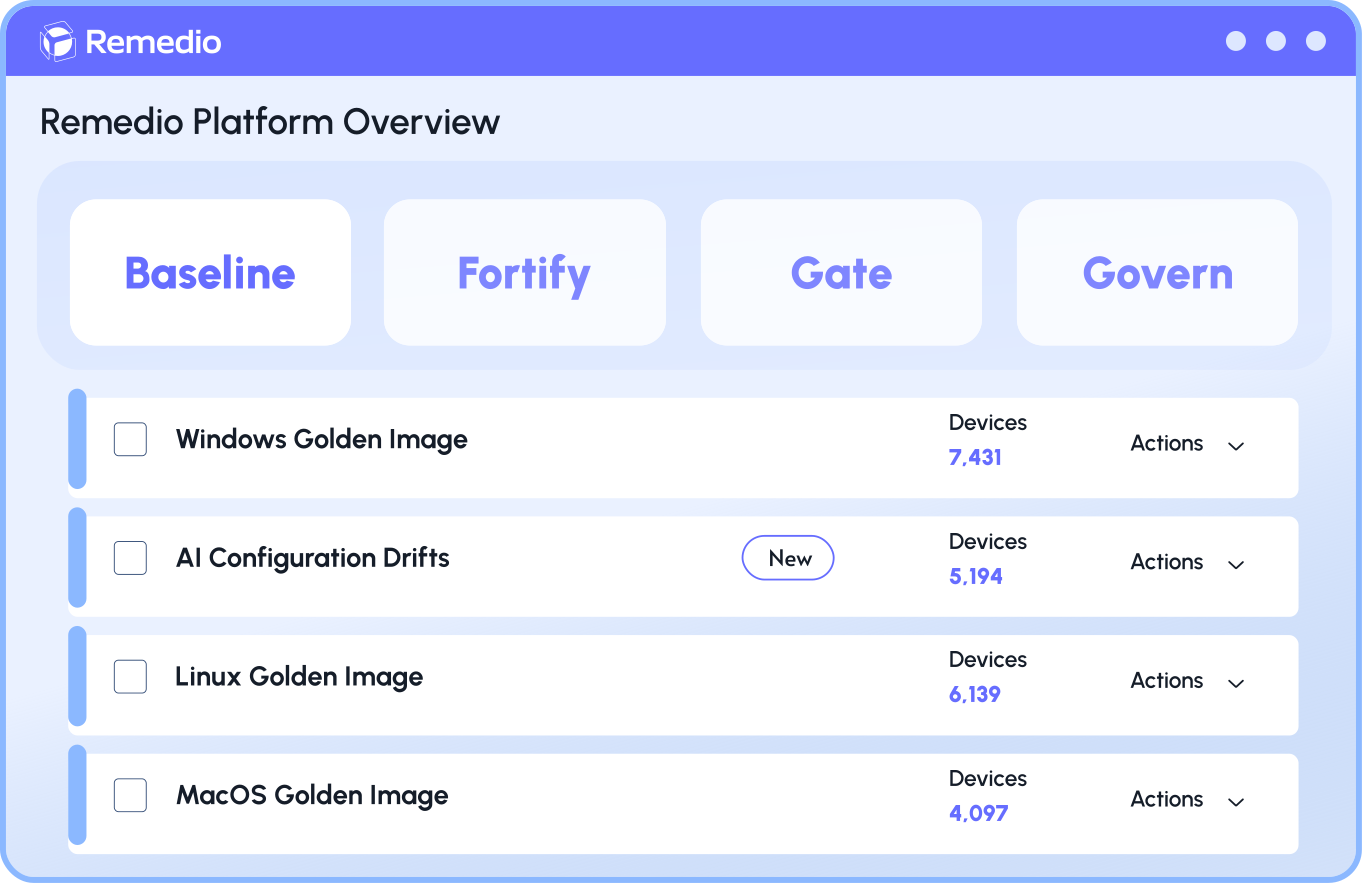
Remedio continuously monitors and enforces Golden Image baselines across all locations, automatically correcting drift and inconsistencies introduced by local changes, vendors, or system updates – ensuring consistent security posture across the entire manufacturing estate.
By comparing each asset’s current state to your organization’s secure baselines, Remedio identifies deviations as soon as they occur. When configuration drift is detected – whether from manual overrides, failed updates, or policy conflicts – Remedio empowers you to realign any device or group to your golden standards with a push of a button, no matter where it’s located.
This enforcement is continuous and scalable, ensuring all plants and vendors stay in compliance and reducing risk without impacting daily operations.
How does continuous enforcement improve manufacturing security?
Periodic audits only provide a snapshot of security posture. Continuous enforcement identifies configuration changes as they occur, verifies that security controls remain aligned with policy, and automatically restores approved configurations when drift is detected. This reduces exposure while maintaining consistent security across every plant and production environment.