
Gartner’s Top Strategic Technology Trends for 2027
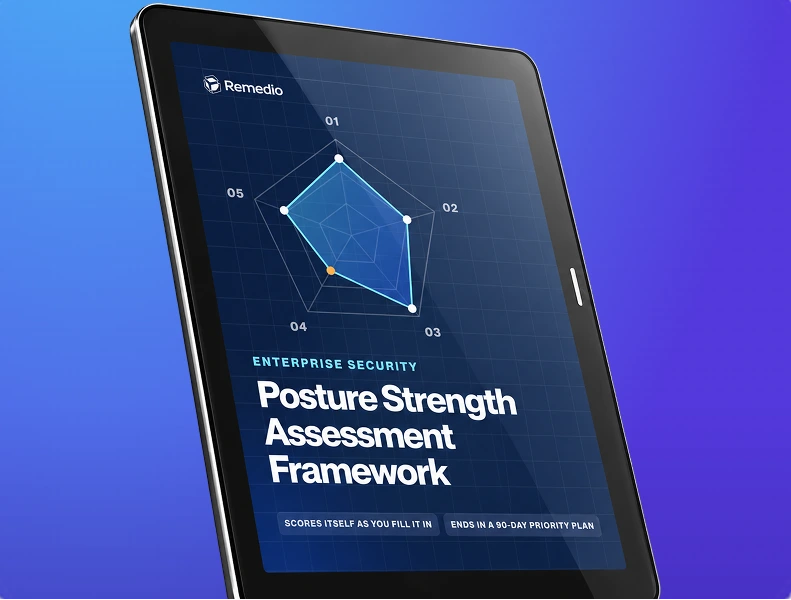


Gartner's Top Strategic Technology Trends for 2027
Autonomous Exposure Remediation
This original Gartner research explores the rise of autonomous exposure remediation.
The research examines how organizations can evolve their automation from risk discovery to full-cycle testing, deployment, and verified remediation.
Access the full report to learn:
- What AER means, what it looks like in practice, and why it matters
- Which remediation steps are routinely automated today and which aren’t
- Where to start and how to scale
Why AER Matters Now
Attackers are leveraging automation to get a leg up on defenders. Bad actors are leveraging AI to disastrous effect. To take back control, cybersecurity professionals must flip the script.
The execution gap
More Findings Won’t Shorten the Exposure Window
AI is accelerating vulnerability discovery, but identifying weaknesses faster does little to reduce exposure when fixes remain stuck in testing, approvals, and deployment.
The next advance in exposure management is closing that execution gap.
The challenge is making the entire process work safely and reliably across production environments.
Where fixes get stuck
New findingsAI-accelerated discovery
TestingWaiting
ApprovalsWaiting
DeploymentWaiting
Exposure reducedFixes that ship
The automation gap
Discovery got automated.
Remediation stalled.
That’s changing.
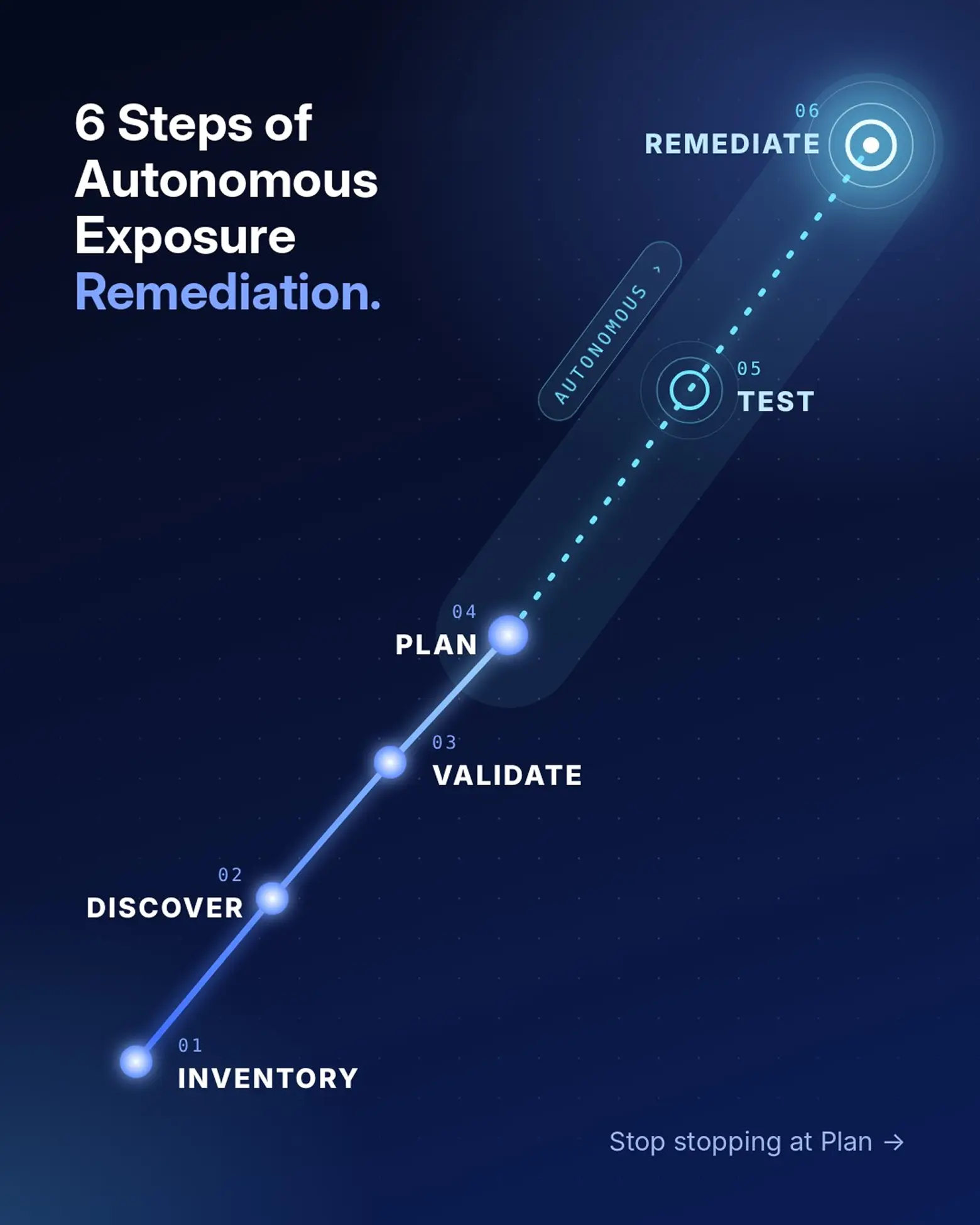
Most technologies stop at planning today. The last two steps, verifying and deploying the fix, are where Remedio really shines.
What’s inside
AER: Connecting the Dots and Closing the Loop
Gartner explains the role autonomous exposure remediation is set to play in streamlining threat management processes – from risk discovery to repair.
This research looks at why AER is gaining momentum and what stands between today’s capabilities and broader adoption.
- Why AER is trending nowAgentic AI is opening automated postbreach activity to less sophisticated attackers, while LLMs are getting better at finding vulnerabilities and generating tests for patches.
- Key adoption challengesFragmented tooling, too little trust to automate critical infrastructure, scanning-heavy automation that inflates fix queues, and unpredictable frontier AI costs.
- Seven recommended actionsFrom starting with a narrow scope and nonsensitive code to tiering automation goals by exploitability and designing architecture for autonomy.
The path forward
Building the Path to Autonomous Remediation
The Top Strategic Technology Trends 2027 report provides CIOs, CISOs, and infrastructure leaders with a framework for expanding remediation automation without compromising operational stability.
01
Close the Remediation Gap
Connect exposure discovery and prioritization to the testing, deployment, and verification activities required to actually reduce risk.
02
Establish Safe Automation Boundaries
Evaluate dependencies, potential disruption, and operational risk to determine where remediation can be automated and where human oversight remains necessary.
03
Build Confidence in Automated Fixes
Use fix validation, nonregression testing, monitoring, and rollback to improve remediation reliability.
04
Advance Toward Greater Autonomy
Prioritize suitable use cases, progressively expand automation, and align remediation capabilities with the maturity of your testing and deployment infrastructure.
The six steps
Beyond Detection: Safe, Automated, Validated Correction
A structural approach to managing the operational risks of autonomous processes without compromising business continuity.
Gartner describes effective AER as end-to-end remediation across six steps of exposure management, from inventory of exposed assets to deployment of the fix.
Autonomous exposure remediation steps (detailed)
ClickTap any step to see what it involves.
Step 1 of 6
Inventory (scan)
- Source code
- Third-party components
- Third-party software
Granular inventory that gives accurate, real-time visibility of exposed assets. AER might apply to only some of your exposures or asset classes.
Most technologies cover this step today.
Get the reportSource: Gartner, Top Strategic Technology Trends for 2027: Autonomous Exposure Remediation, Figure 2. Adapted to Remedio’s visual style. Step descriptions paraphrased from Gartner text.
The trust requirement
The Operational Breakthrough
Safe autonomous remediation depends on understanding system dependencies, testing for regressions, monitoring outcomes, and maintaining reliable rollback mechanisms.
The report finds that today’s technologies don’t yet offer enough trust to update critical infrastructure automatically. Getting there takes comprehensive testing and simulation, high-availability infrastructure and automated rollback, along with an evolving tolerance for risk.
What makes a fix safe to automate:
Dependency mapping. Assess dependencies and potential side effects before a fix runs, and weigh operational risk separately from exposure risk.Built into Remedio
Regression testing. Test each fix for efficacy, and for performance and nonregression, before it reaches production.Built into Remedio
Outcome monitoring. Watch updated systems after deployment to confirm the fix held and nothing else broke.Built into Remedio
Reliable rollback. Undo a change quickly and safely when a fix doesn’t behave as expected.Built into Remedio
Complimentary Gartner research
Start Your Ascent to Autonomous Remediation.
Get guidance on where to start, how to build trust in automated fixes, and how to expand autonomy one use case at a time.
FAQ
You’ve Got Questions, We’ve Got Answers
What is autonomous exposure remediation?
AER uses AI and automation to find vulnerabilities and exposures across custom code, the software supply chain, third-party software and infrastructure, then suggest, test and deploy fixes, with the ability to roll back. It can be a single technology or an integrated multiagent system.
Who is this report for?
CIOs, CISOs and the leaders of vulnerability management, application security and IT operations who are deciding how far, and how fast, to automate remediation.
Is fully autonomous remediation realistic today?
Not across the board. The report puts fully autonomous, cross-company remediation four to six years out, and cautions against one-click promises. It also argues that organizations can already shorten exposure windows substantially with AI-augmented automation across the six steps.
Is access to the full report really complimentary?
Yes. Remedio is sponsoring your access to this Gartner research. Simply submit the form and open the report.
Why is Remedio sharing it?
Remedio is recognized as a Sample Vendor for autonomous exposure remediation in the report. Our focus is the part of the workflow most technologies don’t reach yet: verifying and deploying fixes safely, with rollback.
Gartner, Top Strategic Technology Trends for 2027: Autonomous Exposure Remediation, AI and Cybersecurity Insights Team, 16 October 2026.
GARTNER is a registered trademark and service mark of Gartner, Inc. and/or its affiliates in the U.S. and internationally and is used herein with permission. All rights reserved. Gartner does not endorse any vendor, product or service depicted in its research publications, and does not advise technology users to select only those vendors with the highest ratings or other designation. Gartner research publications consist of the opinions of Gartner’s research organization and should not be construed as statements of fact. Gartner disclaims all warranties, expressed or implied, with respect to this research, including any warranties of merchantability or fitness for a particular purpose.