






-
9 min read
Jun 29, 2026 8:05:06 AM
Play Audio:
Share On:


Every major technology wave changes the enterprise in some way. Mainframes centralized computing. The internet connected businesses. Cloud transformed infrastructure. Mobile transformed work.Each fundamentally altered where technology lived or how people interacted with it.
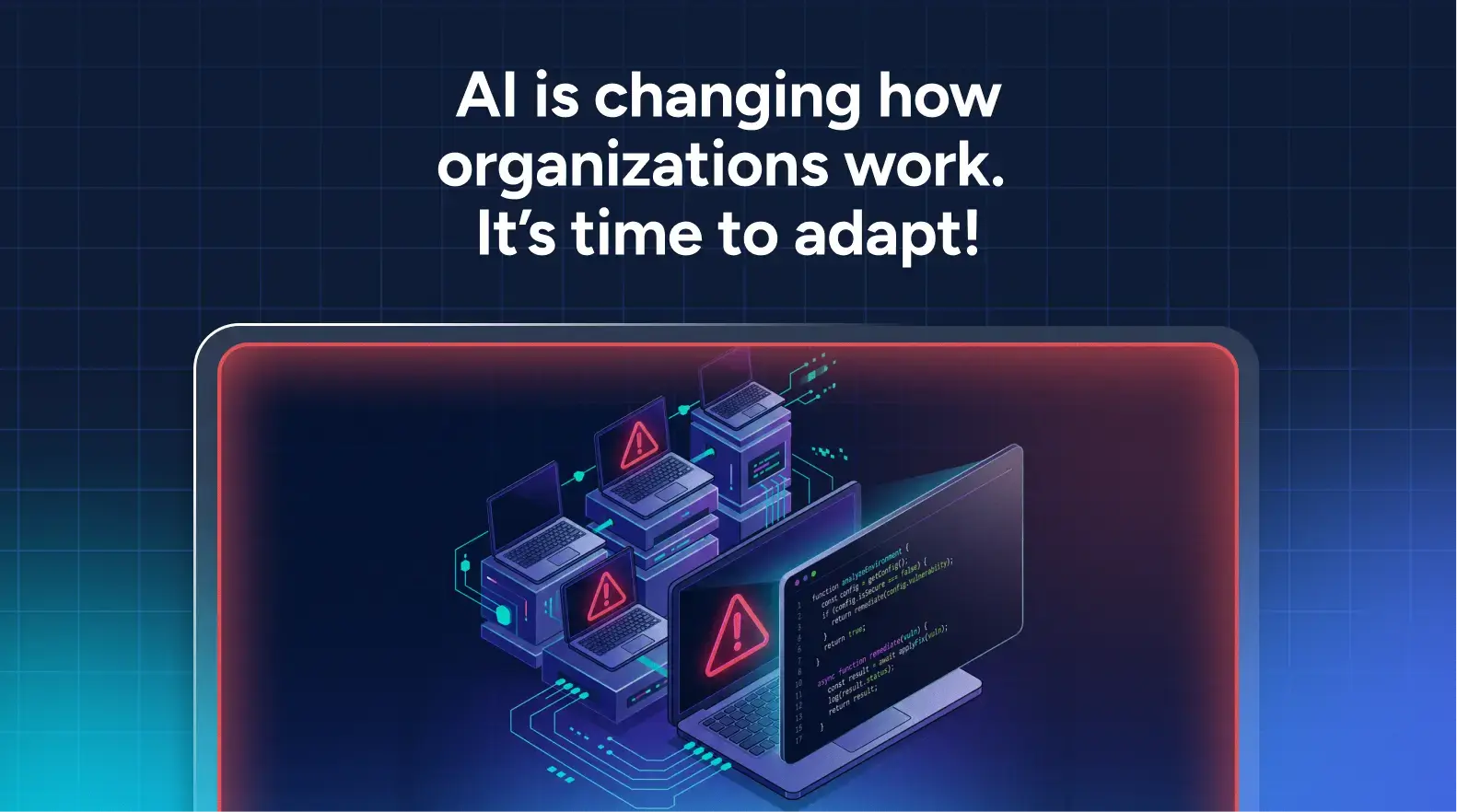
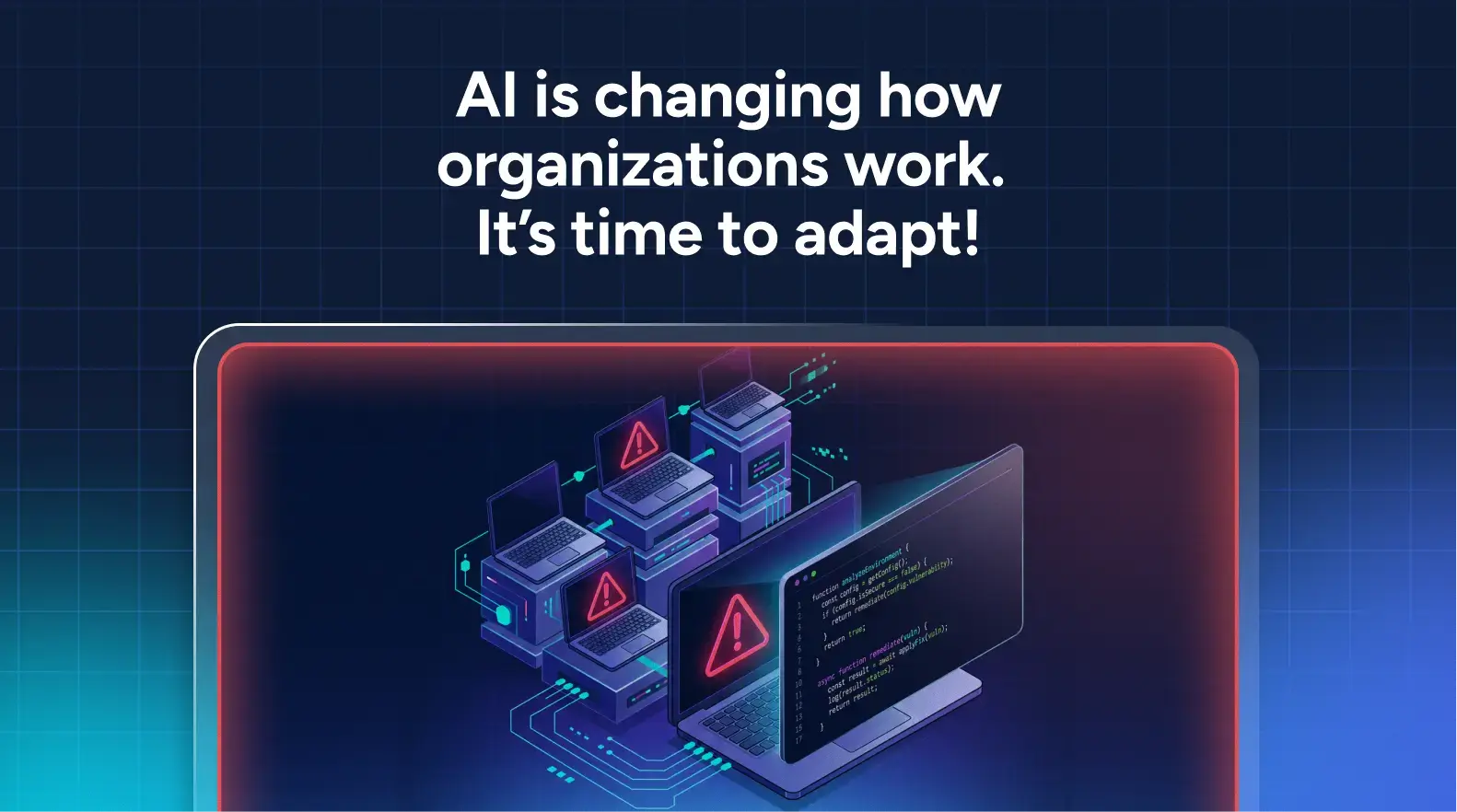
Now it's time for artificial intelligence. Only this time it's different. AI is changing how the enterprise itself evolves.
For the first time, enterprise environments are being modified faster than humans can realistically govern them.
The discussion around AI often focuses on productivity. The bigger story is velocity.
Microsoft's 2025 Work Trend Index describes the emergence of what it calls Frontier Firms – organizations built around hybrid teams of people and AI agents.
Eighty-one percent expect AI agents to become integral to their organization's strategy within the next 12 to 18 months. At the same time, nearly one in four organizations have already deployed AI organization-wide.
Those statistics don't describe another software rollout. They describe organizations fundamentally changing how work gets done.
We Built Enterprises for Stability
For decades, enterprise management relied on a simple assumption:
Organizations changed more slowly than they could be governed.
That assumption shaped almost every management discipline. Procurement reviewed new technology before it entered the business. Architecture teams evaluated integrations. Security assessed risk. Legal reviewed contracts. Compliance updated policies. Change Advisory Boards approved production changes. Internal audit periodically verified that reality still matched policy.
The system wasn't perfect. It didn't need to be. It simply needed to move faster than organizational change. And for most of the digital era, it did.
We Built Organizations Around Five Assumptions
For decades, enterprise management was built on a set of assumptions so fundamental that few organizations ever questioned them.
They shaped everything from procurement and architecture to security, compliance, risk management, and IT operations. They influenced how enterprises approved technology, governed change, managed risk, and allocated responsibility.
None of these assumptions were irrational. They reflected the reality of a world in which organizations evolved more slowly than the people responsible for governing them.

Artificial intelligence is changing that.
Not because it invalidates the goals of governance, but because it changes the pace at which organizations themselves evolve.
As enterprises become increasingly dynamic, adaptive, and interconnected, these assumptions no longer hold as reliably as they once did.
Assumption #1 – Organizations Change Through Projects
For most of the digital era, organizational change was episodic. An ERP implementation. A cloud migration. A Windows upgrade. A new CRM. A merger. A digital transformation initiative.
Change happened through identifiable projects with defined owners, budgets, timelines, and governance. Organizations had an opportunity to evaluate the impact before those changes became part of day-to-day operations.
Today, change is increasingly event-driven rather than project-driven.
A developer installs an AI coding assistant. A marketing team adopts a generative AI platform. A SaaS provider enables AI capabilities by default. An employee connects an MCP server to an internal application. An autonomous agent receives new permissions.
Individually, none of these events appears transformative. Collectively, they can reshape how the organization operates in a matter of hours.
Assumption #2 – People Initiate Change
Historically, people changed technology.
Engineers wrote code. Administrators configured infrastructure. Operators deployed systems. Security teams implemented controls. Technology responded to human decisions.
Increasingly, technology is participating in those decisions.
AI writes code. That code provisions infrastructure. Infrastructure creates identities. Identities authorize agents. Agents invoke APIs. APIs trigger workflows. Workflows deploy more AI.
For the first time, enterprise systems are participating in their own evolution.
Assumption #3 – Governance Can Catch Up
Most governance frameworks were designed around the idea that change pauses long enough to be reviewed. Architecture committees evaluate new technologies. Change Advisory Boards approve production changes. Procurement assesses vendors. Security reviews risk. Compliance updates policies. Internal audit verifies adherence.
These processes remain valuable. But they assume meaningful change occurs at a manageable pace.
Today, AI capabilities appear overnight. Vendors continuously update products. Employees experiment independently. New integrations emerge without formal projects. Autonomous agents establish new relationships across systems in minutes rather than months.
Indeed, Gartner estimates that by 2028, Fortune 500 companies will collectively have more than 150,000 AI agents in production, yet only 13% of organizations currently believe they are prepared to govern them effectively.
Governance is no longer struggling because policies are inadequate. It's struggling because the environment evolves faster than traditional governance cycles were designed to accommodate.
Assumption #4 – Stability Is the Default State
For generations, organizations were managed through periodic observation.
Review. Approve. Audit. Correct. Repeat.
That approach assumed stability between observations. Living systems work differently. They require continuous regulation. The same will increasingly be true of enterprises. Policies cannot simply be documented. They must be continuously validated.
Operational states cannot simply be observed. The must be continuously assured. Drift cannot simply be discovered. It must be continuously corrected.
Permissions expand over time. AI agents acquire new capabilities. Browser extensions update automatically. SaaS platforms introduce new functionality without customer intervention. Trust relationships evolve continuously.
The modern enterprise rarely returns to a stable baseline. It exists in a state of continuous adaptation.
Assumption #5 – Visibility Creates Control
For years, improving visibility was synonymous with improving security and governance.
Discover the assets. Inventory the applications. Identify the vulnerabilities. Document the configurations. Map the risks.
Visibility was the foundation upon which control was built. It still is.
But visibility alone is no longer sufficient.
By the time many organizations have observed their environment, it has already changed. The challenge is no longer simply understanding organizational state.
It is continuously validating that state, enforcing intended policy, correcting drift, and maintaining alignment as the enterprise evolves.
In a continuously changing organization, governance cannot remain periodic. It must be continuous.
The Enterprise Is Now Self-Modifying
Until recently, people changed systems. Today, systems increasingly change systems.
An AI coding assistant generates infrastructure code. Infrastructure automatically provisions identities. Those identities authorize autonomous agents. Agents invoke APIs. Those APIs create workflows. And those workflows deploy additional AI services.
Meanwhile, vendors continuously update models.
Browser extensions gain new capabilities. SaaS platforms quietly enable AI features. Permissions expand. Integrations multiply. Trust relationships evolve.
Nothing malicious has happened. Yet before lunch, the enterprise has become a different organization than it was when the workday began. Not through a strategic transformation initiative. But through hundreds of small, largely independent changes.
That is something traditional governance was never designed to manage.
Suddenly, operators must manage their environments less like engineers calibrating machines and more like ecologists tending living ecosystems. Instead of deterministic systems governed by the laws of physics, they face adaptive environments that grow, evolve, and continuously reshape themselves.
In the past, enterprise environments remained largely stable until people deliberately changed them. Today, they behave more like living organisms. Components regenerate. Connections strengthen and weaken. Relationships evolve. New capabilities emerge. Old ones disappear.
Thousands of AI interactions, software updates, delegated permissions, APIs, autonomous agents, browser extensions, SaaS enhancements, and automated workflows reshape it continuously from within.
In this new reality, the challenge is no longer managing periodic change. It's governing perpetual change.
Every new AI integration creates additional trust relationships. Every delegated permission expands the organization's decision-making surface. Every autonomous workflow introduces new execution paths. Every configuration change modifies operational risk.
It is tempting to view this as an AI governance challenge. Or a cybersecurity challenge. It is neither.
It is an operating model challenge. Risk management. Compliance. Internal audit. Legal. IT operations. Privacy. Finance.
The Next Decade Will Belong to Adaptive Enterprises
The organizations that thrive over the next decade will not necessarily be those that deploy the most AI. They will be those that learn to govern organizations that never stop changing.
That requires a different operating philosophy. One built around continuous validation rather than periodic assessment. Continuous assurance rather than retrospective audit. Continuous correction rather than delayed remediation.
For cybersecurity, that means moving beyond visibility toward continuously reducing exposure as environments evolve.
For the enterprise, it represents something much larger. The transition from managing static organizations to continuously regulating living ones.
Every previous technology wave changed how organizations used technology. AI is changing how organizations themselves behave.
Organizations that behave like living systems cannot be governed as though they were static infrastructure. They require continuous observation. Continuous validation. Continuous regulation. Continuous adaptation.
Security is simply the first discipline to discover this. It will not be the last.

A Senior Marketing Manager with a background in design, Eden drives growth through impactful, resonant campaigns.
Subscribe to
our Newsletter
We are ready to help you until and unless you find the right ladder to success.

For years, enterprise security strategy followed a familiar logic: if one contro...
8 minute read

For years, security teams have treated shadow IT as a visibility problem. Employ...
9 minute read
Security teams love metrics. They track vulnerability counts, patch compliance r...
8 minute read
Enterprise AI adoption is spreading through approved and unapproved paths: copil...
Comments