Gartner’s How to Achieve the Minimum Viable AI Governance


Blog
Cyber Risk Reduction: From Crisis Response to Continuous Control

Autonomous Remediation
Exposure Management & CTEM
Security Misconfigurations
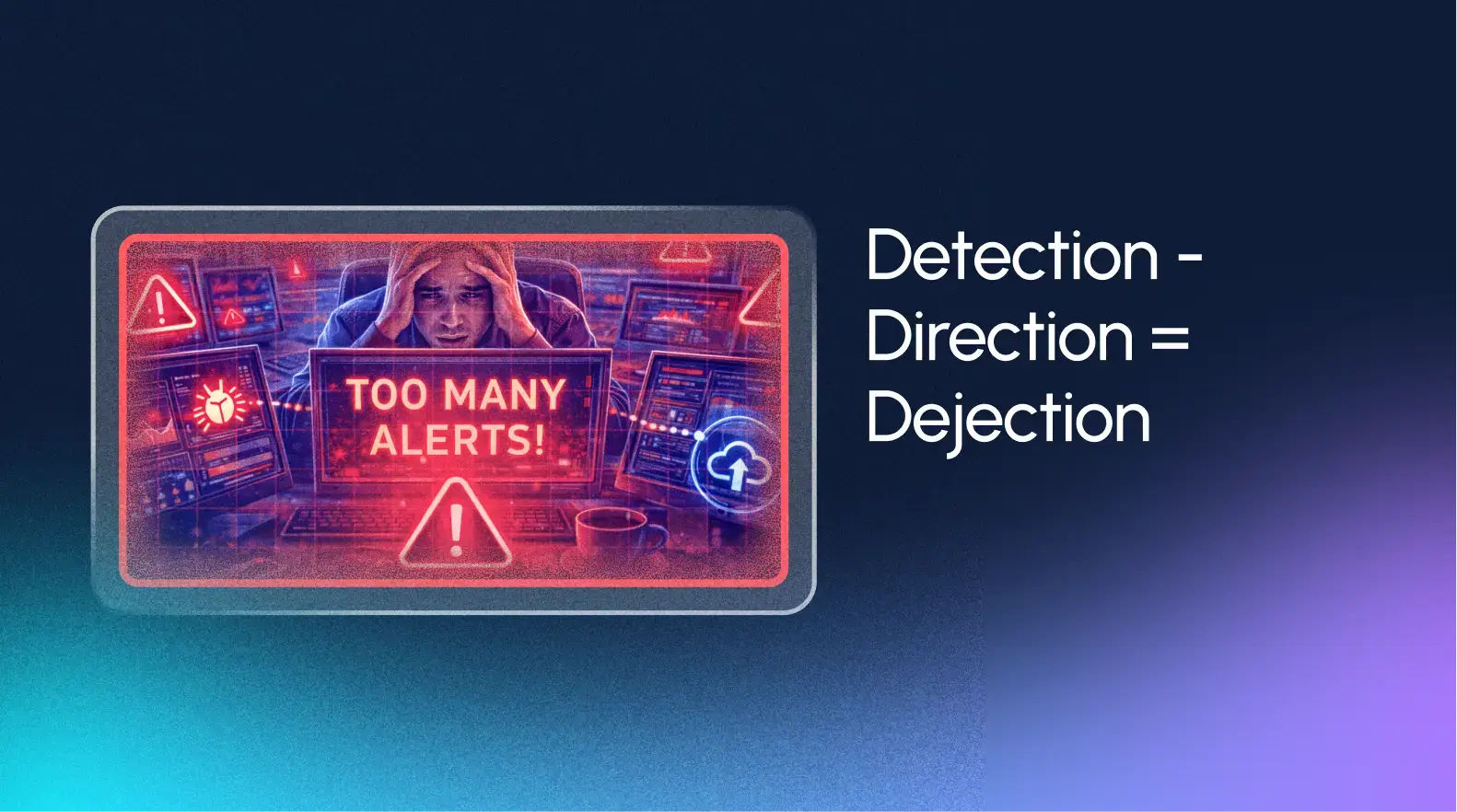
Just how much damage can one misconfiguration cause? At PDS Health, the answer was stark: a single misconfiguration threatened 4,600 PCs and disrupted daily operations. IT and security teams scrambled to uncover what went wrong, only to find a familiar limitation. Traditional security tools could detect the issue but couldn’t fix it fast enough to prevent impact.
That moment became a turning point. PDS realized that alert-only approaches were no longer enough. They needed a solution that could both detect and remediate risks at speed and scale while delivering measurable results.
Remedio provided exactly that. For the first time, PDS teams could not only spot security gaps but also resolve them quickly and safely. Misconfigurations were corrected with the push of a button, the attack surface was reduced, and operations continued uninterrupted.
However, those benefits aren’t unique to one organization. Like PDS, the University of Kansas Health System (UKHS) and the City of Phoenix saw challenges at the intersection of their security and operations. And like PDS, they were able to make remarkable progress with the help of Remedio.
Understanding Risk in the Wild
Attacks hit 80% of businesses, eroding up to 9% of revenue each year. Traditional security often focuses on patching, yet 90% of security incidents can be traced back to human error.
Misconfigured software, overlooked updates, or drifted policies all create critical security gaps that bad actors are happy to exploit.
Overworked security teams often rely on alert-only tools, which detect problems but leave remediation to unreliable scripting or manual follow up.
Remedio changes that equation by providing :
- Clear visibility into operational risk across thousands of assets
- Reduced noise, allowing teams to focus on high-impact actions
- Fewer surprises since the organization...
- Sees issues at their earliest expressions
- Can assess risks and remediations in a dependency-aware manner
By continuously monitoring endpoints, cloud instances, and critical configurations, Remedio helps operators stay ahead of threat actors. In addition, Remedio also has an ROI calculator, so that teams are able to show impact and uplift to the broader business.
Suddenly, your monitoring and management system isn't just about alerts. It becomes about enabling actionable fixes that actually reduce risk and enhance ROI.
Proof at Scale: University of Kansas Health System (UKHS)
Like PDS, UKHS operates a complex healthcare enterprise. It is a nonprofit academic health system delivering advanced care across Kansas. As a healthcare organization, the stakes are high: a breach can literally mean life or death.
Amid its mission‑driven focus, UKHS contended with the immense pressure of securing sensitive patient data, protecting medical operations, and safeguarding an increasingly expansive attack surface.
Yet even with the best of intentions, misconfigurations and overlooked updates left systems exposed, slowing productivity and increasing risk.
With Remedio, UKHS was able to streamline its security operations:
- 3,000 hours saved
- 2 FTE productivity uplift
- All achieved with 0 downtime or disruption
Perhaps most importantly, UKHS gained predictability and control, reducing operational drag and enabling faster, safer innovation.
They were able to quantify improvements in productivity and risk reduction. And once they were able to stop chasing misconfigurations, they were able to advance digital transformation.
How the City of Phoenix Leveraged Remedio
The capital of Arizona and the sixth largest city in the United States, Phoenix has a population of over 1.5 million and serves its community through more than 30 departments.
As a government entity, it oversees critical infrastructure, including an airport, municipal courts, fire and police departments, water treatment facilities, elections, and transit systems.
These high-profile assets make the city a prime target for cyber threats, requiring robust cybersecurity measures. To address misconfigurations across thousands of devices, Phoenix turned to Remedio and saw impressive results:
- 5,000+ misconfigurations fixed in the first days
- 83% attack surface reduction
- 77% faster remediation
- 480% increase in IT and security productivity
By proactively detecting and resolving misconfigurations, the City of Phoenix fundamentally improved the way its IT and security teams operate.
Their success illustrates how Remedio turns complex cybersecurity challenges into measurable outcomes, setting the stage for understanding the broader impact organizations around the world can achieve.
The Greater Impact of Detecting and Fixing
Beyond these case studies, enterprises worldwide enjoy measurable results when using Remedio:
- 50% faster mean time to repair (MTTR)
- 30% attach surface reduction
- 25%+ increases in IT and security productivity
Prioritizing measurable impact ensures that every remediation contributes to real operational and business outcomes.
With Remedio’s built-in ROI calculator, the results of these improvements are expressed into business terms like hours saved, risk reduced, and productivity regained. Security becomes a performance driver that protects uptime, customer trust, revenue continuity, and even innovation.
Ultimately, Remedio delivers something few tools can: the ability to fix what others only detect; the resilience to prevent problems before they escalate; and perhaps most importantly, the confidence to move faster, without compromise.

FAQ
Why isn't detecting cyber risk enough to improve security?
Detection only identifies where problems exist. Risk remains until those issues are safely remediated. Many organizations have strong visibility into vulnerabilities and misconfigurations, but operational concerns, manual processes, and uncertainty about business impact delay action. Effective security depends on consistently eliminating exposure, not simply measuring it.
How does Remedio differ from traditional vulnerability management tools?
Traditional vulnerability management platforms primarily discover, score, and prioritize issues. Remedio combines continuous discovery with safe, automated remediation, allowing organizations to fix vulnerabilities, misconfigurations, and insecure settings while minimizing operational risk. The objective is measurable exposure reduction rather than another layer of alerts.
Why are misconfigurations such a common cause of cyber incidents?
Misconfigurations accumulate through routine operational changes, software deployments, policy exceptions, inconsistent administration, and configuration drift. These weaknesses are often already present inside the environment and can provide attackers with a straightforward path to compromise. Continuous validation and remediation prevent them from becoming permanent exposure.
What prevents organizations from fixing known security issues faster?
The primary obstacle is often operational risk rather than a lack of technical knowledge. Security teams may know exactly what should be fixed but hesitate because a change could disrupt production systems or critical dependencies. Safe remediation requires pre-change validation, dependency awareness, controlled deployment, and rollback capability.
How does automated remediation improve security outcomes?
Automated remediation reduces the time between identifying a risk and eliminating it. Instead of relying on manual scripting, ticket queues, or lengthy coordination, organizations can apply validated fixes consistently across large endpoint estates. This shortens exposure windows, reduces human error, and gives security and IT teams more capacity for higher-value work.
Can automated remediation reduce operational disruption?
Yes, provided the automation is designed around change safety rather than speed alone. Effective remediation validates changes before execution, accounts for system dependencies, supports staged rollouts, and enables rollback when necessary. This allows organizations to increase remediation velocity without treating production stability as an acceptable casualty.
What metrics should organizations use to measure remediation success?
Organizations should measure outcomes rather than activity. Useful metrics include mean time to remediate, attack surface reduction, recurring exposure rates, configuration drift, remediation success rate, operational effort per fix, and the percentage of identified risks that are actually eliminated. These measures show whether security investments are reducing business exposure.
What business benefits can organizations expect from continuous remediation?
Continuous remediation can reduce attack surface, shorten remediation cycles, improve security productivity, strengthen compliance, and lower the operational cost of unresolved risk. It also helps security and IT teams move from repeated crisis response toward a more controlled operating model in which exposure is continuously identified, corrected, and prevented from recurring.
About Author