






-
13 min read
Jul 14, 2026 1:00:01 PM
Play Audio:
Share On:


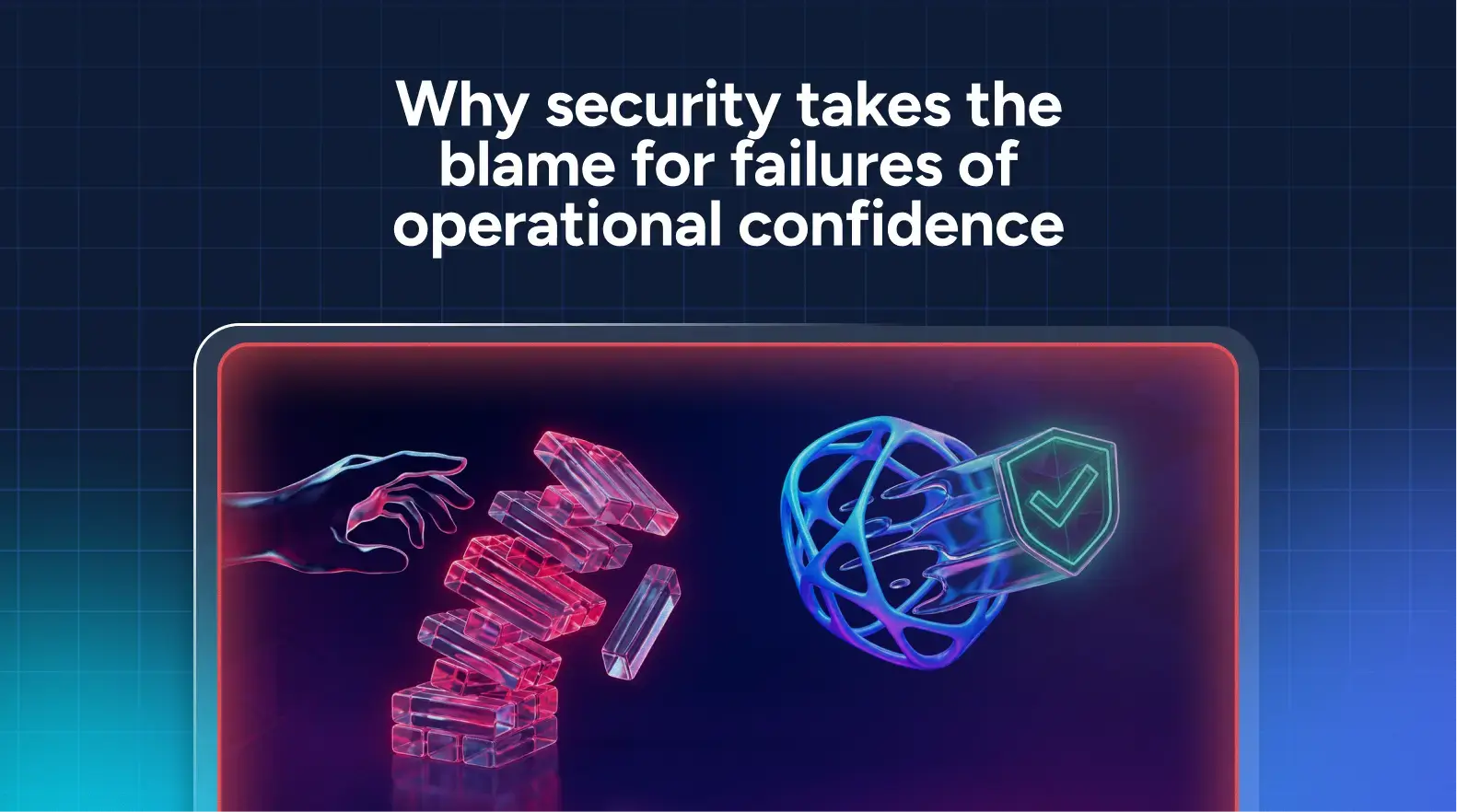
At Remedio, we live at the intersection of Security, IT, and Operations. As such, we often get challenged by stakeholders in those latter two groups. There is a common perception that over-vigilant security impedes the wider organization.
It's easy to understand where this view comes from. Security reviews take time and effort that can delay project rollouts. Patching windows cannot always be perfectly scheduled; sometimes they come at the cost of maintenance and sometimes brief periods of downtime are unavoidable. And there is the constant fear that changes made with risk reduction in mind may inadvertently impact business functionality.
If you spend enough time inside a large enterprise, it is easy to conclude that security is the drag force. But that perception remains a misperception.
No, needless security is not strangling your business. In fact, it's a contention that begins to crumble under the slightest scrutiny.
Quite the contrary, your business is being held back by inadequate security; by deferred remediation, fragmented enforcement, and the widening gap between what teams know is exposed and what they can confidently change.
Operational Uncertainty Compromises Both Hardening & Productivity
Suppose you learn about a new vulnerability that needs patching. Lucky for you, a patch is available. Now suppose that vulnerability exists in a service your business relies on heavily.
You don't fully know how the specific component in which the vulnerability resides interacts with the rest of your technology stack and operations chain. What do you do?
When patches are implemented, they bring changes to your environment. That's the point, after all. But when those changes shut down ports, protocols, or microservices that are actually in use, they can create disruption. Communications fail. Data relays break. Functionality stops working.
And it is not always easy to tell when something is used, especially if it is used infrequently. Infrequent use does not mean unimportant use.
Identifying exactly when, where, and how a patch will intersect with the rest of the environment is easier said than done.
To avoid interfering with critical functionality, you may need to investigate the impact of a patch before applying it. Depending on the result, you may need workarounds or temporary controls outside your standard management architecture.
All of that takes time and resources; which is why hardening projects so often gets framed as productivity sinks rather than critical operational integrity investments.
Of course, the reality is even messier than that. Most hardening projects never see full impact reviews. Instead, they're sorted into one of three broad buckets:
- The organization is not materially reliant on the affected component. In that case, the patch is applied, often after scanning, sandboxing, or a phased rollout that establishes safety before the change reaches critical assets.
- The organization is materially reliant on the affected component. In that case, the patch may be deferred, and if the exposure is sufficiently severe and exploitable, compensatory controls are introduced instead, typically through network isolation, access restrictions, communication controls, and close monitoring.
- The organization cannot determine whether the affected component is business-critical. In that case, the decision often defaults to caution: delay, restrict, monitor, and wait.
For the most part, only issues belonging to that second bucket are ever subjected to full dependency analyses. And that is where the business problem begins.
It's true that smart security sometimes takes time. But the bigger problem is that the appropriate changes are too often skipped entirely. In enterprise environments, these acts of omission are commonplace, and over time, they put an immeasurable strain on the business.

Businesses need operational confidence to succeed. Operational confidence refers to the organization's ability to predict the consequences of security changes before making them. When there is uncertainty about the right course of action, and resources are already stretched, organizations often kick the can down the road. Patching gets delayed. Near-term disruption is avoided. But exposure remains.
Research from the Ponemon Institute found that 60% of respondents who experienced breaches said at least one breach occurred because a patch for a known vulnerability was available but not applied.
The same research found that silo and turf issues delayed patching by an average of 12 days, and that organizations were spending an average of $1.4 million annually on vulnerability management activities without materially improving timely patching.
Of course, patching is only one example. All security changes are subject to those same considerations. That's true whether the changes related to AI policies, identity, cloud configurations, firewall rules, SaaS permissions, or endpoint hygiene.
The fact is when operational anxiety undermines security, it's only a matter of time until it undermines the business too.
Why Security Gets the Blame
When business continuity and productivity come into conflict with security planning and hardening objectives, decision-makers often prioritize the former. The immediate risk of harming operations is treated as more urgent than the possibility of an exploitable gap.
That logic feels practical. But over time, it becomes expensive.
When security is consistently deprioritized, organizations become saddled with outdated technology, stale controls, and fragmented operating practices that slow the business down far more than a well-managed security program ever would.
Unpatched systems contribute to growing technical debt, making future remediation efforts more complex, time-consuming, and costly. Delayed patching creates extra steps that drain business resources. Older technologies introduce compatibility and interoperability problems. Ad hoc scripts require manual oversight and create more room for error.
MITRE makes the point plainly, explaining that outdated systems increase maintenance costs, carry known vulnerabilities, and create continuity risks that directly affect mission-critical operations.
Safe, Effective Execution Is the Bottleneck
Most enterprises can detect vulnerabilities. They can score exposures. They can generate findings. They can open tickets. They can produce dashboards.
But none of that actually removes risk.
IBM’s Cost of a Data Breach research found that the global average data breach cost rose to $4.88 million, while 70% of breached organizations reported significant or very significant operational disruption.
The same research found that organizations using AI and automation extensively saw $1.88 million lower average breach costs, and those applying AI and automation in prevention workflows saw $2.2 million lower breach costs on average.
What that says about breaches is obvious. What it says about execution is more subtle, but no less important.
Organizations that can reduce exposure faster and more safely are in a better position to avoid both security failures and operational fallout. Organizations that cannot are left paying for delay twice: once in manual overhead, and again in disruption.
Without centralized planning and review, organizations end up managing threats in a fragmented way; with layering group policies, MDM rules, patching processes, and custom scripts without a single coherent operating model.
That is how conflicts and blind spots emerge, especially around device types, operating systems, versioning, and edge-case dependencies.
At that point, security becomes labor-intensive not because the goal is wrong, but because the path to achieve it is fragmented.
Recent patch management research reinforces that picture. 64% of security and IT professionals said coordination vulnerability prioritization and IT remediation processes was a major obstacle, while 58% reported delays caused by stakeholders outside IT and security.
This is where security starts to feel reactive, disjointed, and disruptive rather than strategic, unified, and efficient. And the longer organizations tolerate that state of deferred decision-making and fragmented enforcement, the more entrenched and costly the problem becomes.
Insecure Operations Harm Performance
Security is often described as if it trades off directly against performance. In reality, weak or delayed security usually becomes a performance problem long before it becomes a public breach.
If systems remain exposed because nobody can remediate with confidence, teams compensate with more approvals, more oversight, more exception handling, and more reactive firefighting.
That reduces throughput. It increases friction. It keeps skilled operators focused on containment instead of progress. It also creates very serious inefficiencies, as operators try to coax required functionality and interoperability out of deprecated systems, outdated technologies, and legacy infrastructure.
And when something does go wrong, the business impact is rarely limited to the security team. In other words, the cost of unstable or insecure operations does not begin at catastrophe. It begins when core systems become unreliable, slow to change, and expensive to maintain.
To break this cycle, Security, IT, and Operations need to be harmonized under a framework that prioritizes visibility, alignment, and automation.
That means a remediation model that can answer four questions before any change is applied:
- What exactly is exposed?
- What systems, services, workflows, and dependencies are attached to it?
- What is the safest corrective action?
- What happens if the change needs to be rolled back?
When organizations can answer those questions with confidence, security stops behaving like friction. It starts operating like infrastructure.
Periodic oversight identifies the problem, then waits for humans to coordinate the fix. Continuous enforcement closes the last mile: detect, validate, remediate, and verify that the intended state holds.
Only then can organizations reduce their attack surface without compromising business agility; enabling teams to act decisively, reduce friction, and move toward a more resilient and operationally efficient future.
Efficient, Effective Security at Scale
Business productivity and security are often seen as competing priorities, but the truth is that when push comes to shove and you have to face the consequences of lax security, it's pretty much always going to have a devastating affect on your productivity.
Unfortunately, hoping that push never comes to shove is not a defensible strategy. And even if it were, it ignores the fact that even without an incident, the persistent de-prioritization of security will bear an inevitable and very negative impact on productivity.
At best, it will leave you with fragmented visibility and controls, requiring custom development followed by manual oversight and maintenance. At worst, it will leave with with gaping blindspots and growing gaps.
When organizations cannot harden systems, remediate exposures, and enforce policy safely at scale, they do not preserve business momentum. They slowly lose it.
The business pays in delays. It pays in manual effort. It pays in downtime risk. It pays again when unresolved exposure turns into incidents, audits, or recovery work. That is why mature organizations increasingly treat operational safety as a prerequisite for effective security, not as a constraint on it.
Detection without remediation creates operational debt. Change without dependency awareness creates avoidable disruption. And the longer the exposure gap remains open, the more expensive the eventual correction becomes.
Rather than trying to thread the Security vs. Productivity needle, Remedio takes a different approach, deliberately entangling operations consideration into security and vice versa.
Remedio empowers organizations to maintain security and efficiency simultaneously. Our platform enables continuous monitoring and proactive configuration risk management, preventing disruption and boosting performance.
Take the University of Kansas Health System. By implementing Remedio, they improved configuration posture management and saved approximately 3,000 people-hours; the equivalent two full-time employees!. They also uncovered and resolved issues they didn’t know existed, reducing organizational risk by over 30%.
All without negatively impacting operations.
Indeed, when security is seamlessly integrated into daily operations, companies can protect their assets while ensuring performance remains unaffected in both the short and long term. Achieving this balance is both crucial and very achievable.


FAQ
What is safe remediation?
Safe remediation means reducing exposure in a way that accounts for operational dependencies, validates impact before change, and allows controlled rollback if needed.
Does security reduce business productivity?
Poorly implemented security can create friction, but most enterprise drag comes from delayed remediation, fragmented enforcement, and insecure operations rather than from needed security controls.
Why do patching and remediation slow organizations down?
They slow organizations down when teams lack dependency visibility, rollback confidence, and coordinated execution across security and IT.
Why is delayed remediation risky?
Delayed remediation extends the exposure gap between known risk and actual correction, increasing the chances of disruption, downtime, and breach-related costs.
Subscribe to
our Newsletter
We are ready to help you until and unless you find the right ladder to success.


For decades, engineering leaders have understood the dangers of technical debt. ...
16 minute read
Security teams spend too much time fixing the same endpoint risks over and over ...
12 minute read
In cybersecurity, we tend to focus on the dramatic. Nation-state actors, zero-da...
8 minute read
Modern cybersecurity faces a strange paradox: the stronger organizations make th...
Comments